Event Horizon Telescope: Iconic First Image Black Hole Ring Holds Up
An independent group reanalyzed Event Horizon Telescope data and largely corroborated the 2019 picture of the M87 black hole's shadow. Their study, published November 11, 2026, in Nature, includes new images and answers critics who said the ring was an artifact of image processing.
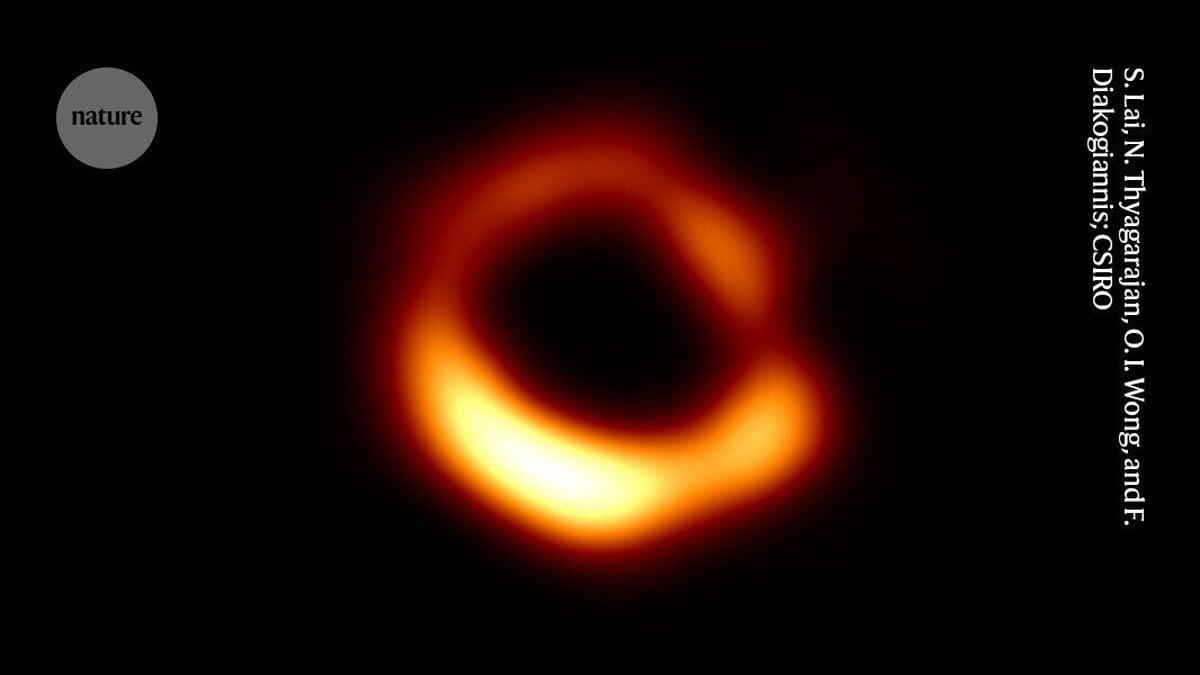
An independent research group has reanalyzed Event Horizon Telescope (EHT) data and largely corroborated the 2019 picture of a black hole's shadow, according to a study published November 11, 2026, in Nature. The result backs the iconic first image black hole researchers released seven years ago, and it comes with new images of the same object.
Why the 2019 image was questioned
The EHT collaboration captured the first picture ever taken of a black hole's shadow in 2019. Some researchers were unconvinced. They argued that the circular shape in that shot was an artifact of the team's image-reconstruction techniques.
The target was the supermassive black hole at the centre of the M87 galaxy. Although blurry, the image matched astrophysical models based on Albert Einstein's general theory of relativity. It showed a bright ring of roughly the correct radius, given what was known about the black hole's size, around a darker disk at the centre.
How the Makino team disagreed
Starting in 2022, Junichiro Makino, an astrophysicist at Kobe University in Japan, and his collaborators challenged those conclusions. They applied one of the data-analysis techniques the EHT team had used, but with slightly different assumptions.
Their result looked different. Their image showed a glob of radio emissions rather than a ring.
What the new analysis found
The new paper comes from a separate group: S. Lai, N. Thyagarajan, O. I. Wong and F. Diakogiannis. It is titled "Independent interferometric observable confirms black hole shadow in M87*". Its results largely corroborate the original findings.
The EHT does not rely on a single dish. The international collaboration stitches together data collected simultaneously by an array of ground-based radio telescopes spread across several continents. In principle, the result has the same level of detail, or resolution, as a single radio dish as wide as Earth.
The reconstruction is extremely challenging, which is why the choice of analysis method drew scrutiny. The new work tests the ring against a different route from the one the EHT team used to reach it.
The paper is the latest step in a debate that began after the 2019 release. It reanalyzes the EHT data independently and produces new images of the M87 black hole.