Ancient Rocks Reveal Earth’s Plate Tectonics Began 2.5B Years Ago
Researchers who studied chemical fingerprints in more than 1,000 rocks say a distinctive signature vanished about 2.5 billion years ago. They read it as a shift in how Earth builds continents, and as the likely start of plate tectonics. Other teams date the start differently.
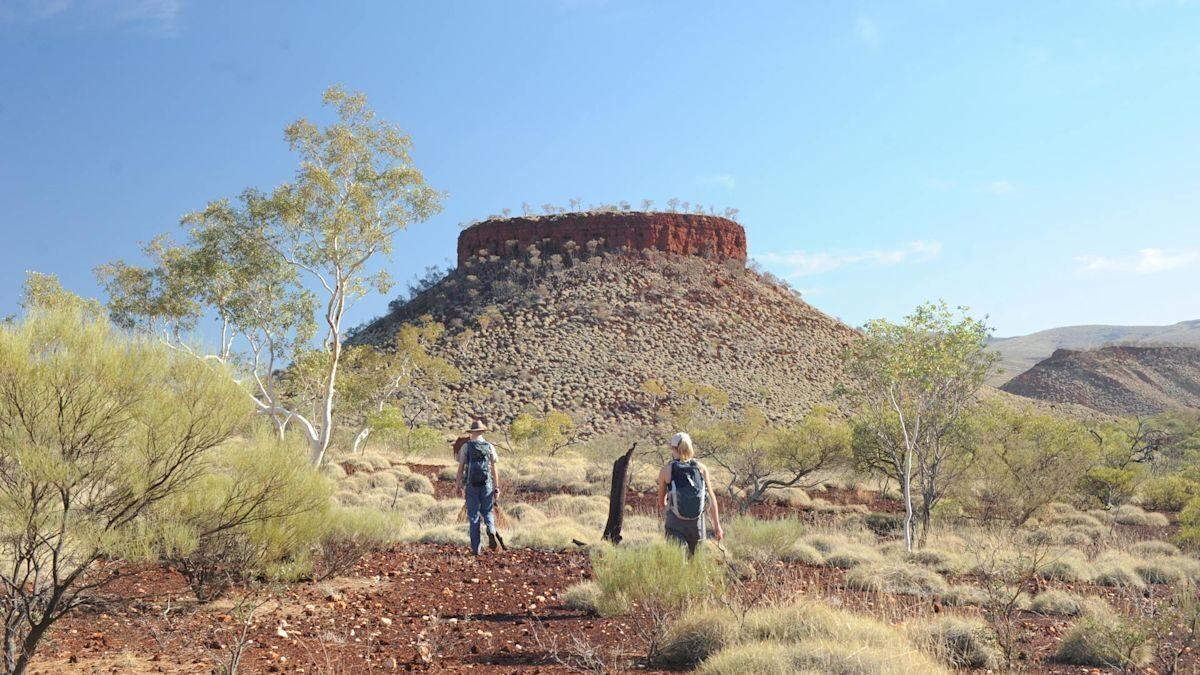
Chemical fingerprints in more than 1,000 ancient rocks reveal Earth's plate tectonics may have begun about 2.5 billion years ago, according to a study reported on November 11, 2026. The authors say a signature of very old crust disappears abruptly from the rock record at that point.
Plate tectonics is the slow movement of huge pieces of Earth's crust. It builds mountain ranges, triggers earthquakes, shapes oceans and continents, and helps regulate the planet's climate and magnetic field over deep time. Many scientists believe it also helped keep Earth livable, unlike tectonically "dead" worlds such as Venus and Mars.
A fingerprint that vanishes
When the process began has long been disputed. Some researchers think it ran through Earth's entire 4.5-billion-year history. Others think it "switched on" at some point.
The question is hard to settle because plate tectonics destroys its own evidence. Colliding plates drag old crust back into the mantle, and rising mountains erode away.
The team looked at a chemical trace that new continental crust inherits when it forms by melting older rock. The authors compare it to DNA passed from parent to child. It can survive for billions of years in some minerals, including feldspar and certain sulfide minerals.
They analyzed rocks from ancient landmasses in Australia, Africa, North America and Europe, spanning nearly four billion years of Earth's history. Some rocks were newly analyzed, and others came from earlier studies.
What the pattern shows
Rocks older than about 2.5 billion years carried the signature of very ancient crust, which appears to have formed about four billion years ago. That material was melted and remelted for well over a billion years to make the granite-like rocks of Earth's earliest continents.
Around 2.5 billion years ago, the signature disappears. The team found no sign of it in hundreds of younger rocks.
The authors read this as a fundamental change in how Earth builds continents. Instead of recycling the same ancient material, the planet began making crust from a mix of old and new sources. That is what happens today at plate edges, where volcanoes bring fresh molten rock up from the mantle while older crust is recycled. They say other evidence points to major changes around the same time, including shifts in rock chemistry and in the thickness and composition of the crust.
Other studies give earlier dates
The 2.5-billion-year estimate is not the only one. A Harvard University study published March 19 in Science reported the oldest direct evidence of plate movement, dating to 3.5 billion years ago. It drew on more than 900 rock samples from over 100 locations in the Pilbara Craton of western Australia.
"With this study, we're able to say three and a half billion years ago, we can see plates moving around on the Earth surface," said lead author Alec Brenner. Roger Fu, a Harvard professor of Earth and planetary sciences, said a strong suspicion is that plate tectonics "started Earth down this divergent track."
A separate paper in Nature describes a 3.95-billion-year-old gneiss, a banded metamorphic rock, from eastern Hebei in the North China Craton. Its authors propose that the rock points to a transient subduction event, in which crust was rapidly pushed down into the mantle.