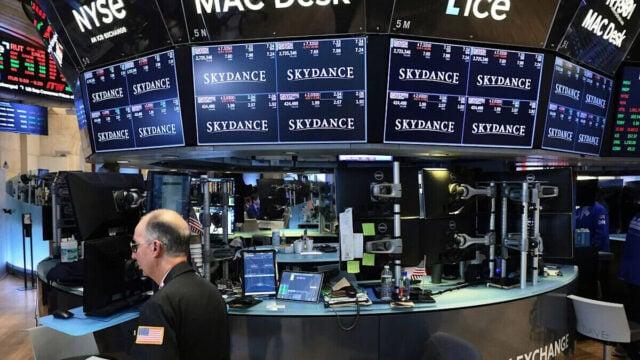
Goldman Sachs Names 3 Signs a Stock Market Bottom Is Near
Goldman Sachs strategists say the S&P 500 needs one of three developments before a bottom can be called: firmer confidence in AI earnings, a dovish Fed signal, or a big drop in investor positioning. The index closed Friday at 6,918.45, in correction territory.
Goldman Sachs says it is watching three conditions that could mark a bottom in the U.S. stock correction: stronger confidence in AI earnings, a dovish signal from the Federal Reserve, or a sharp fall in investor positioning. The S&P 500 is about 12% below its October 6 record.
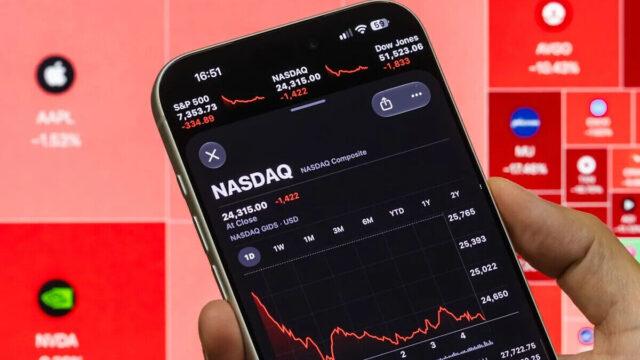
The index fell 3.59% on Friday to close at 6,918.45. That was its seventh straight loss and its longest losing streak since February 2020. The Nasdaq Composite dropped 5.28% and is now down more than 2% for the year.
Goldman strategist Snider wrote that the sell-off "expanded this week from an AI unwind to a broader growth downgrade." The S&P 500 excluding AI stocks is now 6% below its high. Goldman's AI stock basket is down 32% since October 6.
Goldman said any one of the three conditions would support a bottom and a recovery. Its note was priced as of November 19, so it did not fully capture Friday's rout.
AI earnings and the Fed
The AI condition is under test. Anthropic raised $93.5 billion in an IPO after underwriters exercised an option, a record. Its shares jumped 17% on Thursday, then gave most of that back Friday to close at $88.91, against an $83 IPO price.
"Anthropic faded relatively quickly," said Robert Pavlik of Dakota Wealth. Nvidia fell 14% on Friday, its worst day in almost two years, and is down 47.5% since October 6. Jensen Huang resigned as CEO on November 12, and CFO Colette Kress is interim chief.
A dovish Fed looks unlikely soon. Futures put the odds of a December rate hike at about 95%, and the Fed meets December 9. Goldman economists expect hikes in December and March, taking the federal funds rate to a peak of 4.25% to 4.5%. The 10-year Treasury yield is near 5%.
Positioning has not reset
Hedge funds have cut back. Their net leverage is the lowest since April 2025, and their most popular longs have lagged the S&P 500 by 14 percentage points over six months.
Goldman's broader Sentiment Indicator, however, is still above average at 0.7. Asset managers' net equity futures positions sit in the 82nd percentile of the past 10 years. U.S. equity mutual funds and ETFs have taken in nearly $170 billion in the fourth quarter so far.
The VIX, Wall Street's fear gauge, closed at 35.89, its highest in 19 months. "It's a meltdown right now," said Arun Sundaram of CFRA Research. David Kelly of JPMorgan Asset Management countered: "This is not a fatal illness. It's not even the flu."
Goldman's November 17 outlook, written before the drop, forecast the S&P 500 at 8,700 by the end of 2027. Its November 20 note gives a range from about 5,800 to 8,100, depending on whether investors regain confidence in earnings. Capital Economics expects further declines.
 Take the quizWhat Kind of Holiday Spender Are You? Take the Black Friday QuizStart →




 Markets · FintechHow to Calculate Compound Interest: Formula, Examples and the Rule of 72
 Lifestyle · Food & HealthNormal Blood Pressure Chart by Age: Healthy Ranges Explained
 Lifestyle · Food & HealthWhat Is Raynaud’s Syndrome? Why Fingers Turn White in the Cold
 Lifestyle · Food & Health4 Ways Walking After Meals Helps Your Body, Doctors Say