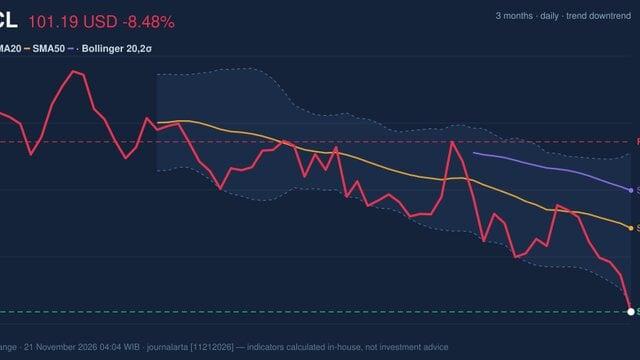
Nvidia Shares Fall 29% as AI Stocks Face Spending Doubts
Nvidia shares have dropped 29% since the midterm elections, even as the chipmaker beat earnings expectations. Investors are questioning the cost of artificial intelligence infrastructure, while a Bank of America survey shows fund managers have reduced their exposure to technology stocks.

Nvidia shares have fallen 29% since the US midterm elections as a wild ride for artificial intelligence stocks gets bumpier. Investors are questioning heavy AI spending, while political opposition to data centers and leadership turmoil at Nvidia have added to pressure on the sector.
The chipmaker beat estimates for October-quarter revenue and earnings, but its shares fell after an initial gain in after-hours trading. Nvidia’s market value has slipped below $4 trillion from a record $5.84 trillion in early October.
Anthropic’s initial public offering also drew attention. The AI lab went public at a $1.5 trillion valuation, but its shares quickly gave up their initial gains as the broader market fell.
Fund managers reduce tech exposure
A Bank of America survey found a net 12% of fund managers held more technology stocks than their benchmarks in November, down from 37% a month earlier. It was the sharpest drop in 20 years. Nearly 40% said companies were investing too much in AI.
Ted Mortonson, managing director at Baird, compared the AI market to “driving a car in a blizzard.” He said investors were reducing risk in major technology holdings.
Chip stocks have suffered broader losses. The Philadelphia semiconductor index, which includes the 30 largest chip stocks traded in the US, is 30% below its June high. Advanced Micro Devices shares are more than 20% below their June highs.
Amazon and Microsoft have held up better, falling about 12% from their highs. Smaller data center operators have fallen further: Nebius Group is 60% below its June high, while CoreWeave is down more than 65% from a 52-week high reached in May.
Debt and data centers in focus
AI-related debt issuance totaled more than $680 billion this year through October, compared with $130 billion in all of 2023, according to a Federal Reserve report. Companies have borrowed heavily to expand data centers, raising questions about whether future returns will justify the spending.
Research firm Cleanview estimates 41% of the current US data center pipeline is in states where a governor or governor-elect has pledged restrictions on the facilities.
Amazon, Google and Meta Platforms reported negative free cash flow in their most recent September quarter. Free cash flow is the money left after a company pays its operating costs and capital spending.
Microsoft reported positive free cash flow of $18.6 billion for the quarter, down from $25.7 billion a year earlier. Oracle’s free cash flow was negative for its previous five quarters.
At Nvidia, interim Chief Executive Colette Kress raised the forecast for revenue growth in the next fiscal year to 75% from 70%. Kress, who is also chief financial officer, said the company would be “rigorously evaluating future investments, commitments and guarantees.”
Former Nvidia leader Jensen Huang is scheduled to testify before a congressional committee on December 1.
 Take the quizWhat Kind of Holiday Spender Are You? Take the Black Friday QuizStart →
- 1Stock Market Today: Dow Slides 1.34% and VIX Jumps 15% at Midday

- 2Joachim Klement to Sell Stocks After S&P 500 Signal

- 3Stock Market Today: Nasdaq, S&P 500 Futures Slide as AI Selloff Deepens

- 4Kenneth Walker’s Groin Injury Puts Cardinals Game in Doubt

- 5Pat Cummins Faces Captaincy Doubts From Mitchell Johnson

 Lifestyle · Food & HealthNormal Blood Pressure Chart by Age: Healthy Ranges Explained
 Lifestyle · Food & HealthWhat Is Raynaud’s Syndrome? Why Fingers Turn White in the Cold
 Lifestyle · Food & Health4 Ways Walking After Meals Helps Your Body, Doctors Say
 Lifestyle · Food & Health4 Reasons to Eat Oatmeal, According to Nutrition Experts