Bumblebees Solve New Problems and Learn From Each Other
Bumblebees can solve unfamiliar problems, learn complex tasks from other bees and show signs of mood-like states, two neuroscientists say. Their commentary examines how the insects’ compact brains support those abilities and what future brain maps could reveal about the roots of intelligence.
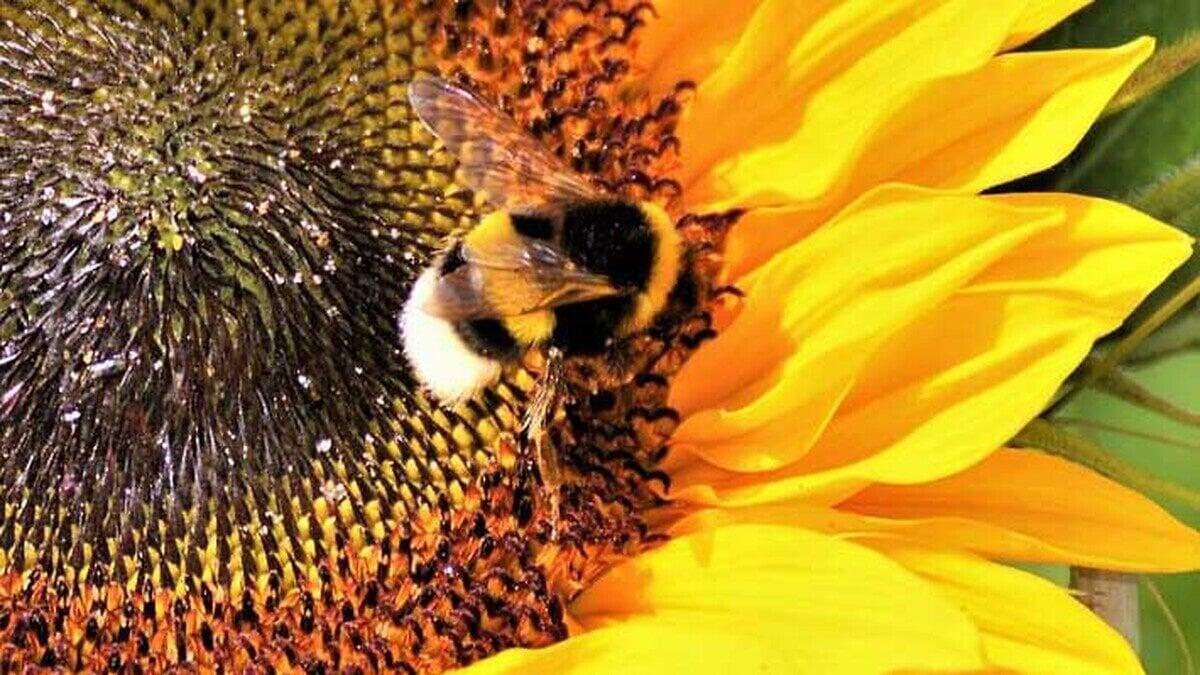
Bumblebees can solve unfamiliar problems and learn complex tasks from one another, two neuroscientists say. Their commentary in Science examines how the insects’ compact brains support those abilities and what brain mapping might reveal about the minimum requirements for intelligence.
Dr. Lars Chittka of Queen Mary University of London and Dr. Stanley Heinze of Lund University reviewed research on bumblebee cognition. They also examined signs of mood-like states that appear to spread between bees.
The researchers define animal intelligence as adapting behavior to new situations through cognition, rather than instinct or trial and error. Bumblebee studies show several ingredients of complex cognition, they said, although they do not cover every area used to investigate animal intelligence.
Bees moved balls to reach nectar
In one experiment, researchers placed bumblebees in a container with a ceiling too low for controlled flight. Artificial flowers containing nectar hung out of reach beneath the roof, leaving the insects to walk.
The bees moved a ball into position and climbed on it to reach the nectar. They could also steer the ball toward a goal they could no longer see.
Chittka and Heinze compared the setup with an experiment in which chimpanzees stacked boxes to reach a banana. The bee results suggest “goal-directed problem solving,” the researchers said.
Other experiments tested social learning with puzzle boxes. Bees had to move latches in a specific order to reach nectar.
Some untrained bees completed the task after watching skilled demonstrators. No bee solved it without an opportunity to learn socially.
Rewards changed bees’ responses
Bumblebees given an unexpected reward judged an ambiguous stimulus as more likely to bring another reward. Researchers interpret that response as an optimism-like state, similar to tests used in mammals.
Bees watching an “optimistic” nestmate through a transparent partition showed a similar bias. Visual information alone transmitted the effect, without food exchange or chemical cues.
Chittka and Heinze said bumblebee brains have features that may help explain problem-solving and the spread of emotional states. Those features include memory systems and circuits that can change with context.
Brain maps could reveal more
A bumblebee has about 50 times more Kenyon cells than a fruit fly, the researchers said. Those cells encode sensory information in an insect brain region called the mushroom body, where associative memories form.
Bees also appear to have more elaborate chemical signaling systems. Their central complex, a brain region involved in selecting actions, has extra circuits that could support the storage of multiple navigational vectors.
Scientists have completed a wiring diagram, or connectome, of the fruit fly brain, with roughly 140,000 neurons. Mapping parts of the brains of three bee species is underway.
Only a few bumblebee brain regions have been mapped at the resolution needed to trace connections between neurons. Chittka and Heinze suggest a full bee connectome could be within a decade’s reach.
 Take the quizWhat Kind of Holiday Spender Are You? Take the Black Friday QuizStart →
- 1Stock Market Today: Dow Slides 1.34% and VIX Jumps 15% at Midday

- 2Joachim Klement to Sell Stocks After S&P 500 Signal

- 3Stock Market Today: Nasdaq, S&P 500 Futures Slide as AI Selloff Deepens

- 4Kenneth Walker’s Groin Injury Puts Cardinals Game in Doubt

- 5Pat Cummins Faces Captaincy Doubts From Mitchell Johnson

 Lifestyle · Food & HealthNormal Blood Pressure Chart by Age: Healthy Ranges Explained
 Lifestyle · Food & HealthWhat Is Raynaud’s Syndrome? Why Fingers Turn White in the Cold
 Lifestyle · Food & Health4 Ways Walking After Meals Helps Your Body, Doctors Say
 Lifestyle · Food & Health4 Reasons to Eat Oatmeal, According to Nutrition Experts