US 45Q Carbon Credit: $85-$180 Tiers and CO2 Pipelines
IRS Section 45Q pays $85 per metric ton for industrial geological carbon storage and $180 per metric ton for Direct Air Capture, with monetization via Direct Pay and Section 6418 credit transfers.
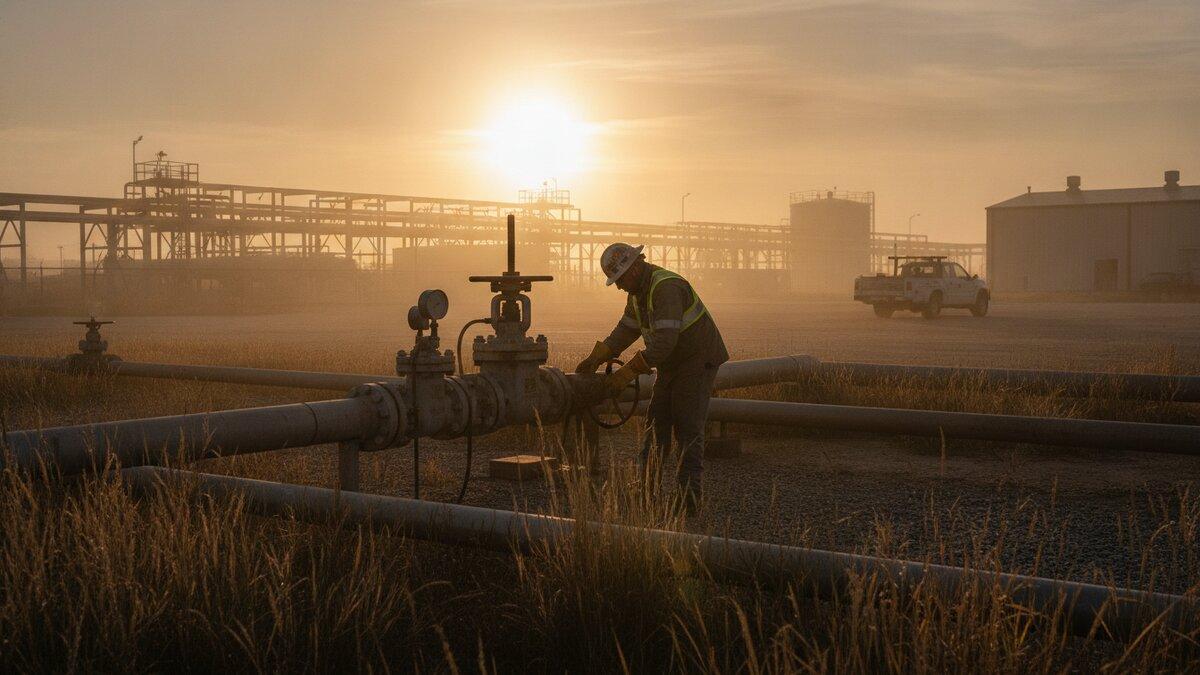
The US 45Q carbon capture tax credit pays up to $85 per metric ton for industrial point-source carbon oxide stored in dedicated geological formations and $180 per metric ton for Direct Air Capture (DAC). To realize full headline rates over the 12-year claim period, project sponsors must satisfy Prevailing Wage and Apprenticeship rules, pass DOE lifecycle verification, and meet PHMSA pipeline and EPA Class VI storage standards.
- Geological Storage Tiers: $85 per metric ton for industrial/power capture and $180 per metric ton for Direct Air Capture when permanently sequestered in saline formations.
- Utilization & EOR Tiers: $60 per metric ton for industrial capture used in Enhanced Oil Recovery (EOR) or qualified products ($130/ton for DAC utilization).
- Wage & Apprenticeship Gate: Failure to meet federal Prevailing Wage and Apprenticeship (PWA) standards reduces 45Q credit values to 20% of the headline tier.
- Cash Monetization: IRC Section 6417 Direct Pay (for eligible tax-exempt entities and initial five-year windows) and Section 6418 transferability enable direct credit sales to corporate tax buyers.
IRS Section 45Q Rates, Direct Pay, and Transferability
Under IRS Section 45Q rules, credit eligibility hinges on minimum annual capture thresholds (18,750 metric tons for industrial facilities, 12,500 metric tons for power plants, and 1,000 metric tons for DAC) and verified 12-year operational production. Rather than requiring complex tax-equity partnerships alone, Section 6418 allows developers to sell 45Q credits directly for cash to corporate taxpayers, while Section 6417 grants Direct Pay refunds to eligible entities.
| Capture & Storage Pathway | Full PWA Rate (USD/t) | Base Non-PWA Rate (USD/t) | Primary Regulatory Gatekeeper |
|---|---|---|---|
| Industrial / Power Dedicated Saline Storage | $85 / metric ton | $17 / metric ton | IRS + EPA Class VI UIC Permit |
| Industrial / Power EOR or Utilization | $60 / metric ton | $12 / metric ton | IRS + DOE Lifecycle Analysis (LCA) |
| Direct Air Capture (DAC) Saline Storage | $180 / metric ton | $36 / metric ton | IRS + EPA Class VI UIC Permit |
| Direct Air Capture (DAC) Utilization / EOR | $130 / metric ton | $26 / metric ton | IRS + DOE Lifecycle Analysis (LCA) |
For utilization pathways, the IRS requires a formal Lifecycle Analysis reviewed by the US Department of Energy (DOE) to confirm net greenhouse gas reductions. Industrial supply-chain managers benchmarking US clean-energy incentives alongside domestic mineral processing can also review US industrial mineral refining supply chains.
PHMSA CO2 Pipeline Rules and EPA Class VI Storage Bottlenecks
Capturing CO2 at an ethanol, ammonia, or steel plant is only half the engineering challenge; moving supercritical CO2 at high pressure requires interstate trunklines regulated by the Pipeline and Hazardous Materials Safety Administration (PHMSA). Because dense-phase CO2 behaves differently from natural gas during a rupture, forming cold vapor clouds that act as an asphyxiant at high concentrations, PHMSA has moved to tighten standards covering pipeline routing, fracture-arrest steel metallurgy, dispersion modeling, and local emergency-response coordination.
At the injection terminus, EPA Class VI underground injection permits govern well construction, pressure monitoring, and post-injection site care. Long permitting timelines at the federal level have prompted states such as North Dakota, Wyoming, and Louisiana to seek primacy to accelerate Class VI approvals, though multi-state pipeline right-of-way disputes remain a primary schedule risk. Compression stations also require substantial continuous electric power, making grid interconnection queues a critical bottleneck alongside subsurface permitting.
For comparison with European industrial decarbonization models, see our breakdown of UK carbon capture cluster regulations and transport-and-storage funding structures.
Midstream Compression Costs, Electricity Demand, and Storage Siting
From an engineering cost standpoint, capturing CO2 from dilute flue gas streams such as natural gas combined-cycle power plants or cement kilns requires substantially higher parasitic steam and electric loads than high-purity ethanol fermentation or ammonia streams. Industrial operators must size multi-stage centrifugal CO2 compression trains to reach supercritical pipeline pressures above 1,100 psi (roughly 76 bar) while meeting strict moisture and oxygen purity specifications to prevent carbonic acid corrosion inside carbon-steel trunklines.
Because dedicated saline aquifer storage hubs require continuous monitoring, reporting, and verification (MRV) plans approved by the EPA alongside Class VI injection wells, merchant storage operators increasingly structure per-ton transport-and-storage tipping fees that share 45Q upside with upstream emitters. Evaluating whether to build captive on-site injection wells or contract capacity on a shared regional trunkline is therefore a decisive capital-allocation trade-off for US industrial energy buyers.
Commercial Checklist for Energy and Industrial Buyers
Industrial emitters evaluating capture retrofits should prioritize facilities situated directly above suitable saline basins to minimize interstate PHMSA pipeline exposure and compression capex. Where trunkline transport is unavoidable, procurement teams must embed prevailing-wage audit clauses into EPC contracts so the 5x PWA multiplier ($85 versus $17 per ton) is never jeopardized during construction or ongoing maintenance.
Corporate buyers acquiring 45Q credits under Section 6418 transferability should require independent engineering verification of EPA Class VI monitoring plans, DOE LCA sign-offs, and tax-credit recapture insurance to mitigate IRS audit exposure. Buyers should also confirm minimum annual capture thresholds (18,750 metric tons for industrial plants, 12,500 tons for power units, and 1,000 tons for DAC) remain consistently exceeded across multi-year supply agreements. Combining upfront compression efficiency with verified storage siting determines whether Section 45Q delivers durable project cash flows or stalls in midstream permitting.
 Take the quizWhat Kind of Holiday Spender Are You? Take the Black Friday QuizStart →





 Lifestyle · Food & HealthNormal Blood Pressure Chart by Age: Healthy Ranges Explained
 Lifestyle · Food & HealthWhat Is Raynaud’s Syndrome? Why Fingers Turn White in the Cold
 Lifestyle · Food & Health4 Ways Walking After Meals Helps Your Body, Doctors Say
 Lifestyle · Food & Health4 Reasons to Eat Oatmeal, According to Nutrition Experts