Von der Leyen: Europe Security Talks Only After Ukraine Ceasefire
European Commission President Ursula von der Leyen said on November 9 that talks on Europe's wider security architecture must wait for a ceasefire in Ukraine. She announced €50 million for Black Sea maritime security as US-mediated talks open in Abu Dhabi.
European Commission President Ursula von der Leyen said in Bucharest on Monday, November 9, that broader negotiations on Europe's security architecture can begin only after a ceasefire in Ukraine, as she announced €50 million for Black Sea maritime security.
Von der Leyen sets the condition ahead of trilateral talks between Ukraine, Russia and the United States, scheduled to begin Tuesday, November 10, in the United Arab Emirates.
She spoke at a joint press conference with Romanian President Nicușor Dan.
"Any meaningful discussions about Europe's security architecture can only be undertaken once a ceasefire in Ukraine has been achieved," she said. She insisted that any such negotiations must include NATO allies and EU member states.
The Abu Dhabi talks, she said, must concentrate on ending the war. "The focus of these peace talks is ending Russia's war in Ukraine. That must be the goal," she added.
Funding for the Black Sea
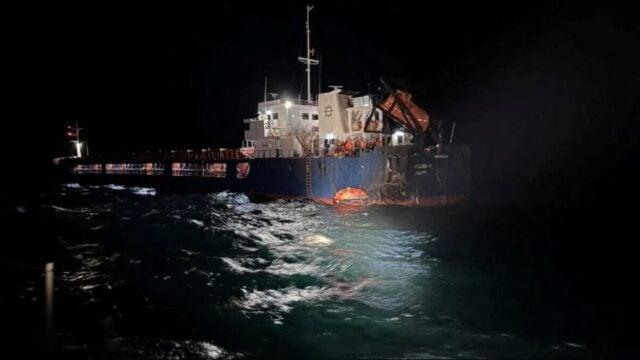
Besides the €50 million for a Black Sea Maritime Security Hub, von der Leyen announced €10 million for search-and-rescue operations. She also backed Kyiv's call for a ceasefire in the Black Sea, where Russian attacks have threatened commercial shipping and food exports.
She said Ukrainian President Volodymyr Zelensky had asked for European support in the peace negotiations and that Brussels was providing it. European representatives will attend the Abu Dhabi talks alongside other partners, she said.
The EU is also drafting a postwar prosperity plan for Ukraine and working on security guarantees meant to prevent another Russian invasion. "We're currently working on a post-war prosperity plan for Ukraine," she said.
Washington's proposal and European worries
Her remarks followed proposals from Washington to eventually include wider discussions between Russia and European governments on the continent's security arrangements. European officials have voiced concern that such talks could reopen Moscow's long-running demands for limits on NATO's military presence in Eastern Europe.
Dan warned that Russia was increasingly using hybrid operations to destabilize the Black Sea region and draw European countries into its war. He cited drone incidents, sabotage, cyberattacks and disinformation campaigns.
He said Russia was trying to escalate the conflict beyond Ukraine's borders through military pressure combined with hybrid warfare.
"We cannot speak of lasting peace in Ukraine or effective reconstruction without a secure Black Sea," Dan said. He described the region as vital to European energy security, international trade and transport links with the Caspian region.
Dan also reaffirmed Romania's support for Ukraine's and Moldova's European integration, arguing that their accession would strengthen regional security and prosperity.