NASA Moon Base Student Challenge Offers $1 Million Prize
NASA Administrator Jared Isaacman announced a $1 million Moon Base Student Challenge on November 8, 2026. Students have until January 25, 2027 to register and tackle six unsolved engineering problems tied to a planned lunar south pole outpost.
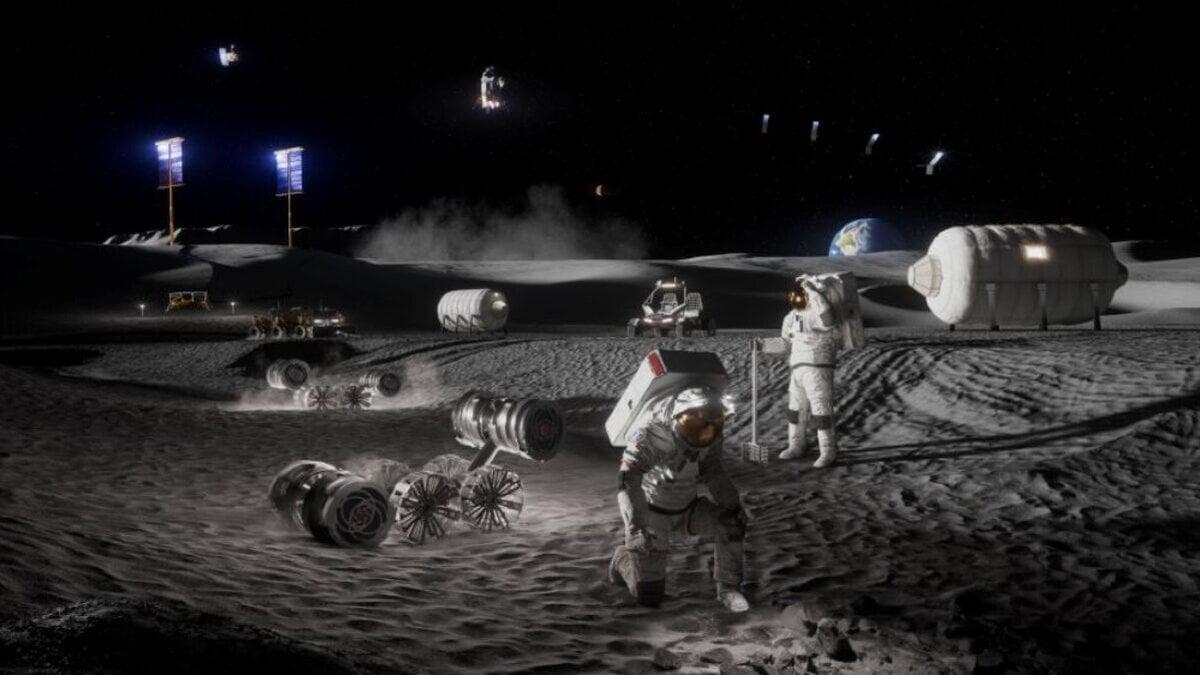
NASA opened a $1 million Moon Base Student Challenge on November 8, 2026, asking students to work on engineering problems the agency has not yet solved for its planned lunar south pole outpost. NASA Administrator Jared Isaacman announced the competition at the Kennedy Space Center Visitor Complex.
Isaacman and Moon Base Program manager Carlos García-Galán made the announcement from a stage at NASA's first public aerospace expo. Thousands of visitors were present, surrounded by rows of spacecraft hardware.
High school and post-secondary students can enter, including technical and vocational students, not only those at four-year universities. They must register at NASA STEM Gateway by January 25, 2027. Teams will submit trade studies and stakeholder briefings, the same deliverables working aerospace engineers produce.
NASA has not yet said how the $1 million will be divided across categories or finalist tiers.
A funded program, not an exercise
The contest is tied to NASA's Moon Base Program, announced in March 2026 at a Kennedy event Isaacman called the program's "Ignition." The program aims to establish a permanent crewed outpost at the lunar south pole by the early 2030s.
NASA's Moon Base Architecture Users Guide lays out a three-phase construction plan. It involves 81 launches, 73 lunar landings and approximately 214,000 kilograms of payload delivered over the first decade.
García-Galán said much remains unknown about the site. "We're going to be getting tons of data from the South Pole, which again, we know very little about right now," he said.
Power and construction among six categories
The challenge has six categories, each built around an open engineering problem. Power is one of them.
Ridge tops, including the rim of Shackleton Crater, NASA's target site, receive sunlight for as much as 80 to 90 percent of the year. But shadow periods can last more than 354 hours, nearly 15 Earth days. NASA is pursuing nuclear fission surface power, using compact reactors, to cover those gaps.
Construction is another category. Shipping materials from Earth to the Moon costs roughly $1 million to $2 million per kilogram, so building with lunar soil, known as regolith, would remove that cost. Regolith can be sintered into bricks, cast into structural panels and processed into basalt fiber composites.
It is also abrasive enough to destroy seals and clog mechanical systems. Any equipment would have to run autonomously or semi-autonomously in a vacuum and extreme cold, with no technician on site for repairs.