Anthropic Researcher Claims Claude Helped Prove Riemann Hypothesis
Anthropic researcher Levent Alpöge says he worked with Claude to prove a long-standing mathematical hypothesis about prime numbers. Other mathematicians are checking the claim. If verified, the result could establish assumptions used across mathematics, though it would not directly break widely used encryption.
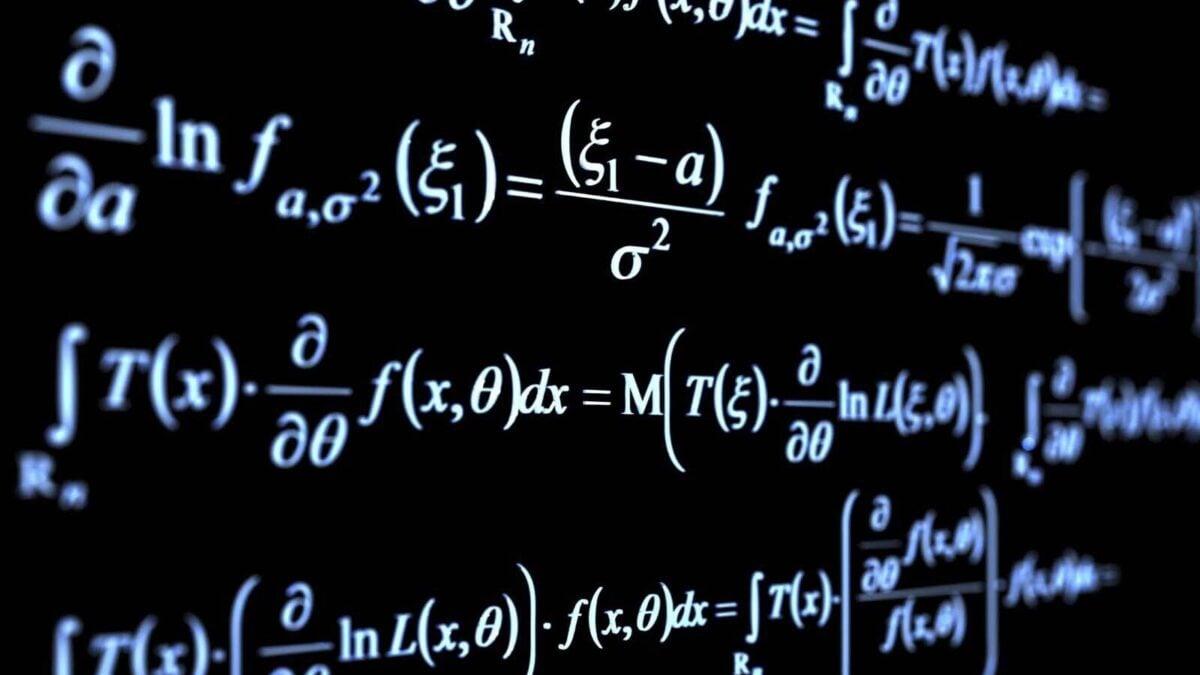
Anthropic researcher Levent Alpöge says he worked with the Claude artificial intelligence system on a proof of the Riemann hypothesis. The claim raises a question: What is AI capable of in mathematics? Other mathematicians are checking the work, and the claimed proof has not yet been independently verified.
Alpöge posted his claim on his personal website. He also included a Claude-generated proof written in Lean, a programming language used to check whether mathematical reasoning is logically consistent and correct.
“I believe I have, working with Claude, discovered a proof of the Riemann Hypothesis,” Alpöge wrote.
A broader claim about primes
Alpöge’s proposed proof concerns the generalized Riemann hypothesis, a broader version of a problem about the distribution of prime numbers. Primes are numbers divisible only by themselves and 1. The generalized version applies to a wider class of mathematical functions related to those numbers.
The original hypothesis was proposed by mathematician Bernhard Riemann. It is one of seven Millennium Prize Problems posed by the Clay Mathematics Institute in 2000. Resolving it carries a $1-million prize.
A verified proof of the generalized hypothesis could establish that many mathematical assumptions built on it are true. It could also improve algorithms used in computational number theory and the study of algebraic number fields.
Practical benefits could eventually follow, although such advances might be invisible to most people.
Encryption would not directly break
A proof would not directly break RSA, a widely used public-key encryption scheme. RSA’s security depends on the difficulty of factoring enormous numbers into their original prime factors. Proving the generalized hypothesis would not provide a known shortcut for that task.
Determining whether a number is prime is different from finding the prime factors of a very large number. The generalized hypothesis could improve mathematicians’ understanding of the former without resolving the latter.
Mathematicians are checking the work
Independent verification will determine whether Alpöge and Claude have solved the problem. Some preliminary, informal responses have suggested that the proof is correct, while other mathematicians are examining it.
The problem has resisted more than 150 years of effort by mathematicians. A verified proof produced with Claude and Alpöge’s guidance would offer evidence that AI can help establish new mathematical knowledge, rather than only explain existing theorems or assist with proofs.
Alpöge’s post includes the Claude-generated proof in Lean for mathematicians to examine.
 Take the quizWhat Kind of Holiday Spender Are You? Take the Black Friday QuizStart →





 Markets · FintechHow to Calculate Compound Interest: Formula, Examples and the Rule of 72
 Lifestyle · Food & HealthNormal Blood Pressure Chart by Age: Healthy Ranges Explained
 Lifestyle · Food & HealthWhat Is Raynaud’s Syndrome? Why Fingers Turn White in the Cold
 Lifestyle · Food & Health4 Ways Walking After Meals Helps Your Body, Doctors Say