Brain Cell Mapping Charts 25 Million Cells Across Three Species
Scientists mapped more than 25 million cells in the basal ganglia of humans, macaques and marmosets, building a three-dimensional atlas of a brain region tied to movement, decision-making and several diseases. Researchers expect a whole-brain dataset by the end of next year.
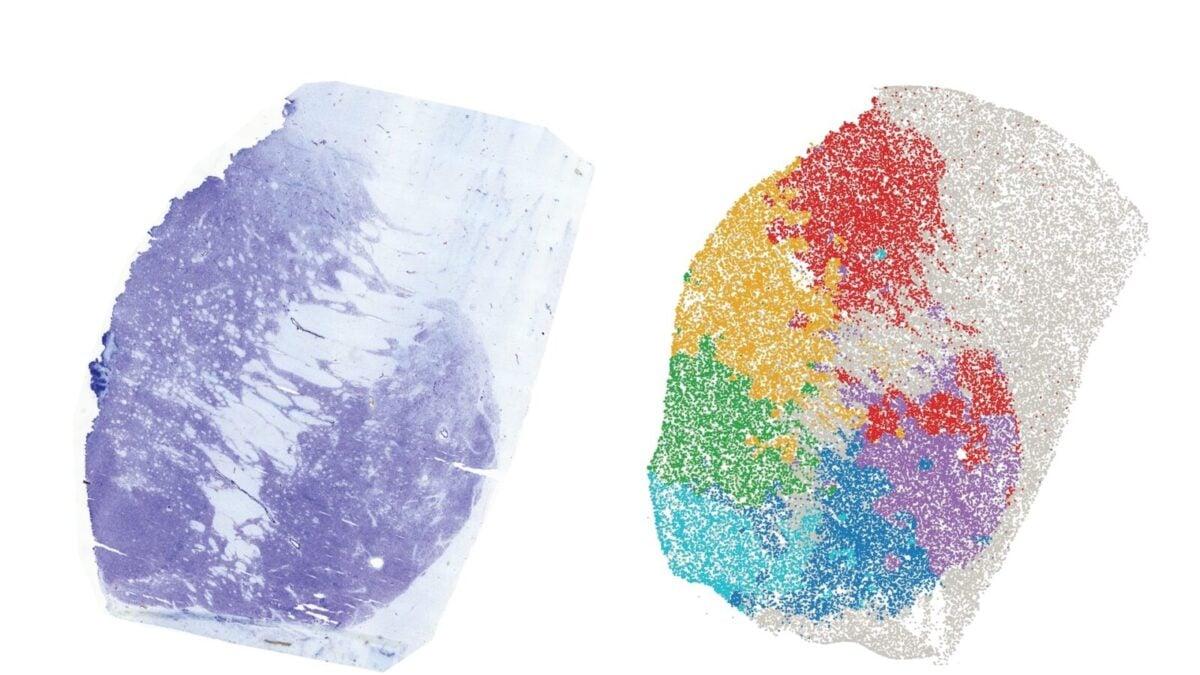
Scientists mapped more than 25 million cells in the human, macaque and marmoset basal ganglia, a step toward a whole-brain atlas that could guide research into neurological and psychiatric diseases. Brain cell mapping lays out where cells sit, which genes they express and how they vary across the three species.
The basal ganglia occupy about 2% of the brain. These interconnected clusters help control movement, decision-making and habits.
Researchers chose the region because it is shared across species and is implicated in conditions including Parkinson’s and Huntington’s diseases, schizophrenia, depression, bipolar disorder and addiction. The map presents the data in three dimensions, including a heat map of cells expressing genes associated with conditions such as Parkinson’s or Alzheimer’s disease.
“If you know where they are, then you know, OK, those cells containing that gene probably play important roles in this disease,” said Hongkui Zeng, director of brain science at the Allen Institute.
The atlas and more than two dozen accompanying papers were published as a package by Cell Press. The work took three years and involved researchers at more than 50 institutions around the world. The National Institutes of Health provided most of the funding.
Researchers hope the atlas will help scientists pinpoint where brain functions occur and build on a shared framework. Satrajit Ghosh, a senior scientist at the McGovern Institute for Brain Research at MIT, compared the effort with the Human Genome Project, which gave researchers a common foundation for their work.
Talia Lerner, a basal ganglia researcher at Toronto’s Center for Addiction and Mental Health who was not involved in the study, said the findings could inform more precise medicines. Some Parkinson’s treatments can increase pathological gambling and other risk-seeking behavior, she said.
“The more that we can learn about this and, like, which function is where, the more I think we can make really targeted medicines that will have fewer side effects and will be able to help people more,” Lerner said.
The researchers expect to have a dataset for the whole brain by the end of next year and to publish it in the next couple of years.
 Take the quizWhat Kind of Holiday Spender Are You? Take the Black Friday QuizStart →
- 1U.S. Emergency Alert Test Nov. 17 Is Not a Power Outage

- 2Women With Autoimmune Diseases Wait About 4 Years for Diagnosis, Study Finds
- 3DUP Chairman Lord Morrow Loses Wife and Daughter Within Hours in NI

- 4Micron Stock Falls 28% as $35.16 Billion Buyback Nears

- 5I’m A Celebrity 2026 Line-Up: Rooney Leads 11 Stars Into Jungle

 Lifestyle7 Signs Your Social Battery Is Running Low (and Why You Keep Cancelling Plans)
 Lifestyle · Food & HealthThanksgiving Food Safety: How Long Leftovers Last and the Safe Turkey Temperature
 Lifestyle7 Quiet Habits of Emotionally Intelligent People, According to Psychologists
 LifestylePeople Who Don’t Like Celebrating Their Birthday Often Share These 7 Traits