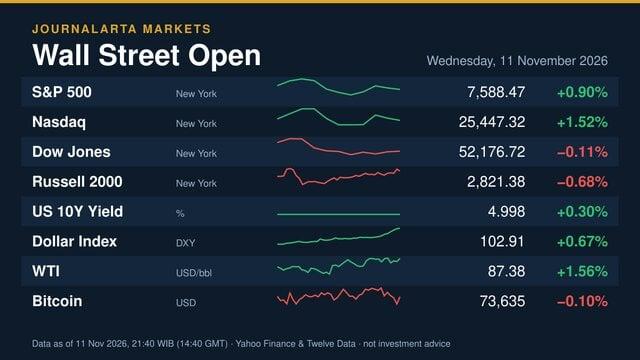
S&P 500: Strategists See Three Reasons for a Year-End Rally
Wall Street strategists point to lower valuations, seasonal market trends and signs that selling pressure may fade as reasons stocks could rise into year-end. JPMorgan kept its S&P 500 target at 8,000, while analysts cautioned that trading could remain rocky in the short term.

Wall Street strategists see three reasons stocks could rally into year-end: lower valuations after a sell-off, seasonal gains around midterm elections and signs that negative momentum may soon reverse.
The Dow Jones Industrial Average closed Monday at 52,405.89, up 2.18%, or 1,120 points, as investors bought beaten-down shares after last week’s market decline.
The outlook comes as banks including JPMorgan and HSBC take a bullish stance heading into 2027. JPMorgan reiterated its 8,000 price target for the S&P 500 and said its view partly reflected optimism about artificial intelligence, even while accounting for the possible effects of tighter data-center regulation.
Valuations have fallen, which analysts say may help support a recovery. Independent technology analyst Luke Lango cautioned that the rebound could be a “dead cat bounce,” or a temporary recovery before further losses.
Still, Lango said fears that spending on artificial intelligence infrastructure would falter appeared overblown. A slowdown in data-center investment would be driven by politics rather than weaker demand, he said.
“Spending gets stretched out, not cut off. It’s a transition, not an ending, and it leaves us more bullish than ever on the next three to five years, even as we stay cautious on the next three to six months,” Lango wrote in a client note.
Seasonal patterns offer another reason for optimism. BlackRock’s analysis found that the S&P 500 gained an average 14% in the six months after midterm elections since 1970, compared with an average 6% in non-midterm years.
November and December have also tended to be strong months for the index. Knode Wealth Management’s analysis found average gains of 1.85% in November and 1.4% in December since 1950.
Yardeni Research found that the S&P 500 ended December higher 70% of the time since 1928, making it the month in which the index was most likely to post a gain.
A potential shift in market momentum forms the third part of the case. Ned Davis Research said its momentum gauge had flashed a sell signal as the artificial-intelligence sell-off intensified, but the firm expects the negative short-term trend to reverse.
“This suggests more potential for rocky trading ahead, but the speed of this model means any rebound should be caught quickly with a new buy signal,” said London Stockton, an analyst at the firm. Ned Davis Research said it would look for broader participation among large growth stocks.
JPMorgan described last week’s decline as likely a “de-leveraging event,” as investors and institutional buyers unwound leveraged positions while valuations fell. Leverage had been near a record high in the summer, a condition strategists have warned can expose investors to margin calls.