Helicopter, 142 Personnel Fight Renewed Peatland Fire in Jambi
A renewed wildfire in Indonesia’s Londerang peatland reserve has drawn 142 personnel, heavy equipment and a water-bombing helicopter into a coordinated firefighting effort.
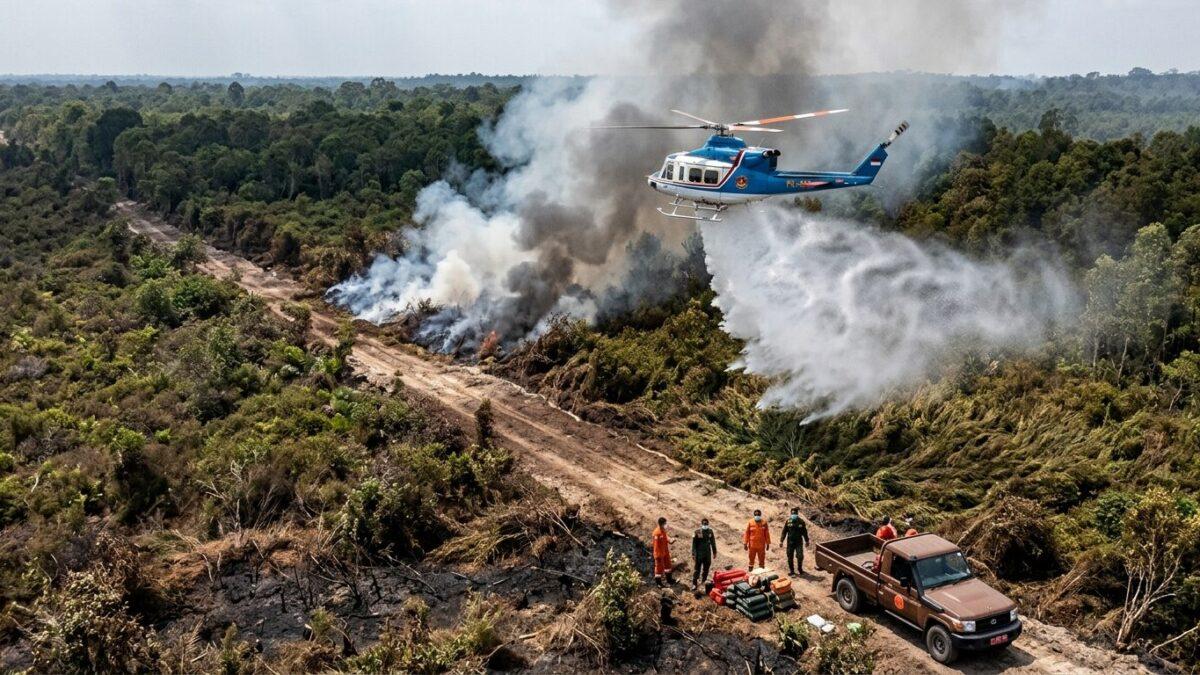
JAMBI, Indonesia — A renewed fire in a protected peatland area on Indonesia’s island of Sumatra has mobilized 142 personnel and a water-bombing helicopter, underscoring the challenge of containing blazes that can smolder and spread beneath the surface.
The fire in the Londerang Peatland Protected Forest was first detected on Aug. 27, 2026, and extinguished after six days of intensive work, on Sept. 2. Flames reappeared in another part of the reserve in mid-September, prompting crews to resume firefighting and wet down the area to reduce the risk of further flare-ups.
As of Sept. 17, the response included a helicopter, heavy machinery, firefighting pumps, drones and operational vehicles, said Taufik Qurochman, head of public relations at PT Wirakarya Sakti (WKS), an affiliate of the Asia Pulp & Paper Group that manages the peatland area.
Ground and air teams coordinate
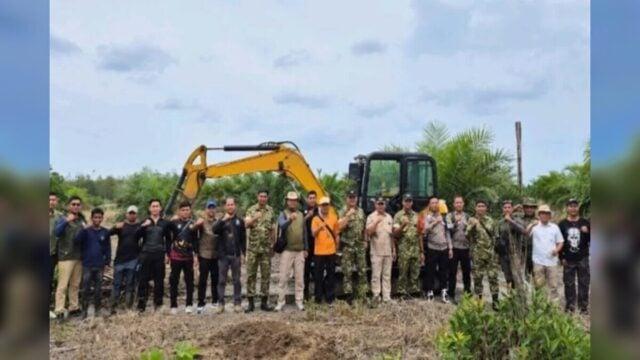
The operation brings together WKS’s firefighting teams, Indonesia’s Manggala Agni forest-fire brigade, the Jambi regional disaster management agency, the military and water-management teams. Peat fires can spread through underground layers and are difficult to reach with conventional methods, requiring crews to coordinate ground operations with aerial monitoring and water drops.
“The response to the fire in the Londerang protected peatland is a joint effort. Various teams are working together on firefighting, wetting the land, managing water sources and monitoring the area,” Taufik said in Jambi on Sept. 17.
WKS deployed 12 pieces of heavy equipment to help create firebreaks and clear canals. Ground support also included 24 firefighting pumps, nine four-wheel-drive operational vehicles, 15 motorcycles, about 120 Sambunesia cooling kits and hundreds of rolls of fire hose.
Ongoing suppression effort
Two drones are being used for real-time monitoring, while the helicopter drops water over the affected area. Water-management teams are also maintaining supplies for firefighting and continued wetting, a step intended to keep peat from drying out and reigniting.
“Peatland characteristics require intensive and coordinated handling. Ground operations, water-source management, heavy equipment, aerial monitoring and water bombing are being integrated and continuously adjusted to actual conditions in the field,” Taufik said.
Crews are weighing weather, terrain and access when deciding how to deploy resources, while maintaining coordination to protect personnel. “Our shared priority is to handle the fire as effectively as possible while safeguarding all personnel,” Taufik said.