David Tennant Called TV’s Best Villain as Rivals Season Two Returns
A critic describes David Tennant's Sir Tony Baddingham as a performance dripping with venom as Rivals returns for the six-episode second part of season two.
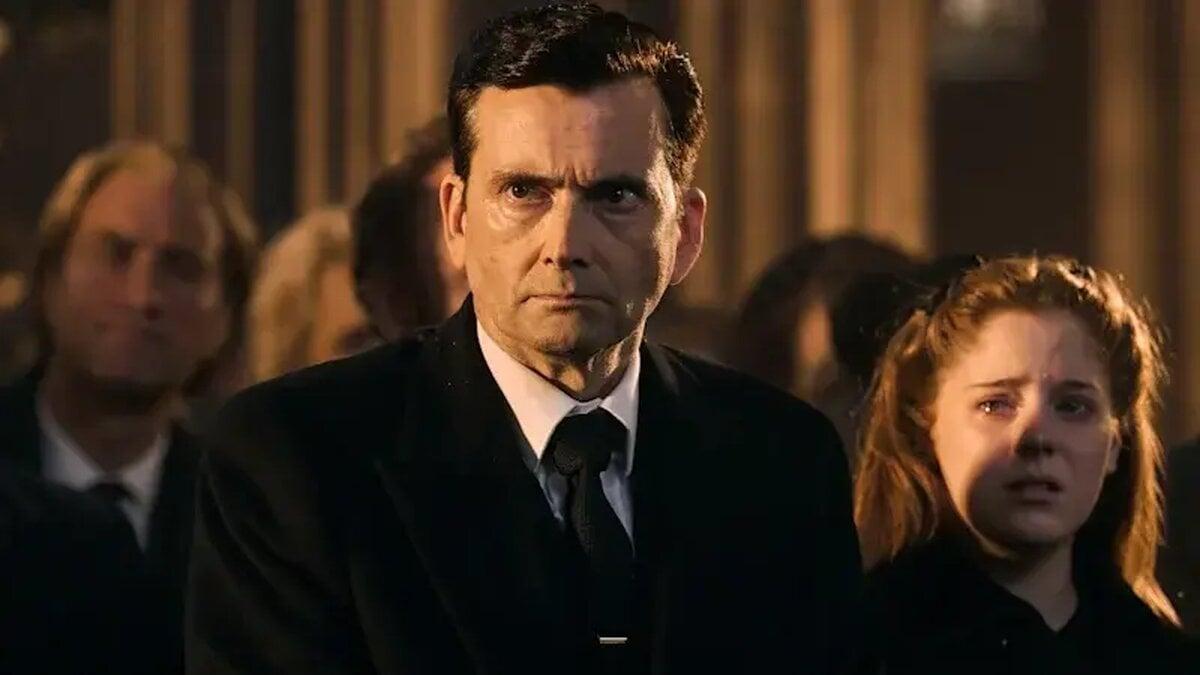
David Tennant's Sir Tony Baddingham is the best villain on television right now, a critic writes in a review of the second part of Rivals season two. The six-episode run concludes the season after a five-month wait for fans.
Tennant plays the cigar-chomping media tycoon and adulterer-in-chief. The reviewer says he "chews every scene he is in" and "draws blood."
A villain with venom
Told he is the father of a baby, the result of an affair with a colleague, Tony replies: "Get rid of it." He lies, cheats and bullies his way through the Cotswolds.
The review says the performance pushes aside memories of Tennant's upbeat Doctor Who and his mournful detective in Broadchurch, and calls it finely tuned, never tipping into cliché. Episode one ends with an act so shocking that the reviewer gasped.
Where the story picks up
The new episodes begin in the aftermath of the shock death of Tony's wife Monica, played by Claire Rushbrook. Her death was untimely but convenient, and the review leaves open whether it curbs his behaviour or lets it flourish.
The battle between the rival TV licences ends. It pits Tony's Corinium against Ventura, run by Declan O'Hara and Rupert Campbell-Black. The more interesting fight, the reviewer says, is over Taggie's affections: will she choose Rupert or be swayed by Bas?
Rupert and Taggie are played by Alex Hassell and Bella Maclean. Aidan Turner plays Declan O'Hara.
Jilly Cooper's world on screen
The reviewer describes the show as Benny Hill meets Succession. It mixes deep emotion and ambition with penis-shaped topiary and a 1980s soundtrack, including a performance of Lady in Red by Chris de Burgh himself.
The series celebrates and excoriates the hooray Harrys and polo-playing cads of Thatcherite Britain in equal measure, and does not hide that for many people the era was not great.
The reviewer finds it baffling that Rivals does not generate the same devotion or analysis as its big-name HBO rivals, and wonders whether its origins are the reason. Rivals is adapted from Jilly Cooper's Rutshire Chronicles, which many women love for centring female characters and the female gaze.
Cooper was dismissed for much of her career as not serious or literary enough. The review says her social observation is as sharp as anything in Succession, although her writing carried racism and sexism that was normalised in the 1980s. The show, it adds, shows the consequences of that sexism and homophobia, and it is the women who make the power moves.