Israel Tortures Palestinian Prisoners to Extract Confessions, Group Says
An Israeli rights group says its examination of 42 complaints found that Palestinian detainees often confessed after alleged torture by interrogators. The Public Committee Against Torture in Israel warned that such practices could lead to irreversible miscarriages of justice as Israel moves to expand use of the death penalty.

Israeli interrogators used torture to extract confessions from Palestinian prisoners, an Israeli rights group said after examining 42 complaints. The Public Committee Against Torture in Israel warned that the practice risks irreversible miscarriages of justice as Israel moves to expand use of the death penalty.
The group examined complaints filed over the past decade against interrogators from Shin Bet, Israel’s internal security service. More than three-quarters of the complainants said they confessed after torture or other illegal methods, the group said.
One in 10 said they gave incriminating statements about other people under torture.
Interrogation records detail sleep deprivation
Sleep deprivation was the most frequently reported form of torture in the complaints, the group said. More than half included stress positions and other physical violence.
In hundreds of testimonies over the years, Palestinian detainees have described sleep deprivation, slapping, kicking, threats, sexual violence and stress positions.
The group cited official Shin Bet records in the case of a Palestinian lawyer arrested in February 2019. During 27.5 days of interrogation, he was questioned for more than 552 hours, averaging 20 hours a day.
One session lasted nearly 48 hours. Some of the remaining 108 hours were spent traveling to and attending detention hearings.
Israel’s Supreme Court prohibited deliberate sleep deprivation as an interrogation method in a 1999 ruling. The lawyer was convicted of involvement in shooting attacks based on information extracted during the interrogation period.
The state inspector for complaints about Shin Bet interrogations ruled that the questioning followed procedures, the group said. More than 1,680 torture complaints were filed with the inspector between 2001 and 2024; none led to an indictment.
Death penalty raises stakes
In March, the Knesset passed a law allowing the execution of Palestinians convicted of terror charges over deadly attacks. The law does not apply to Jewish Israelis who commit similar crimes.
In the occupied West Bank, where Palestinians are tried in military courts, execution is now the default punishment for a defendant convicted of deadly terror attacks.
“The death penalty is always wrong, because it’s cruel, irreversible and negates the right to life,” said Sari Bashi, the group’s executive director.
United Nations human rights chief Volker Türk warned that the legislation would constitute a war crime if enacted. A separate law empowers a special tribunal to impose death sentences in cases arising from the October 7, 2023, attacks.
 Take the quizWhat Kind of Holiday Spender Are You? Take the Black Friday QuizStart →
- 1Qualcomm shares rise to $168.66 as chipmaker bucks wider tech selloff

- 2Meta Platforms shares rise 2.5% as AI loan and Amazon talks draw focus

- 3Broadcom shares edge down as late rebound trims early AI selloff

- 4Alphabet stock slides to $270 as credit concerns deepen

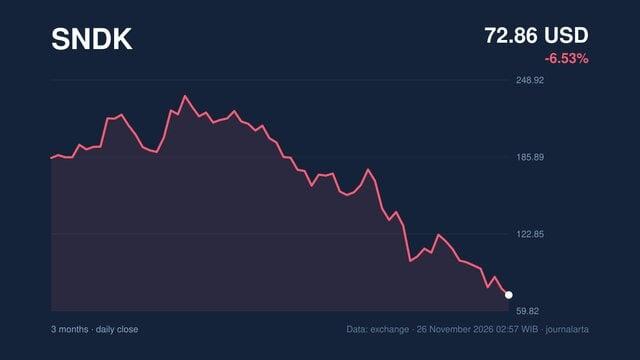
- 5Sandisk stock slides as memory supply fears hit AI trade
 Lifestyle · Food & HealthNormal Blood Sugar Levels: A1C, Fasting and After-Meal Ranges Explained
 Lifestyle · Food & HealthNorovirus Symptoms: How Long It Lasts and When You Stop Being Contagious
 Lifestyle · Food & HealthCold vs Flu vs RSV: How to Tell the Difference by Symptoms, Speed and Duration
 LifestyleWhy Do Long Lines Make People Curious? 5 Reasons We Join the Crowd