NASA’s Voyager 1 Will Reach One Light-Day From Earth
NASA’s Voyager 1 is set to reach a distance of one light-day from Earth on November 18, a milestone that will make a radio message take 24 hours to reach the spacecraft. Its reply will take another day to return.
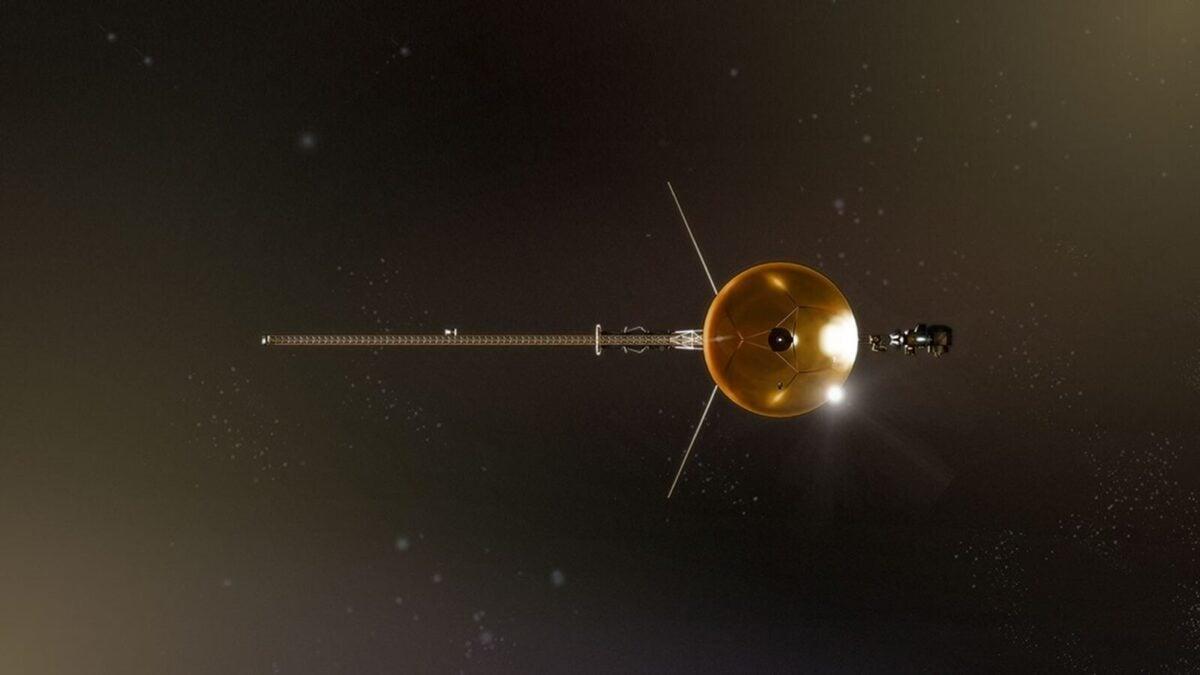
NASA’s Voyager 1 will reach one light-day from Earth on November 18, a distance at which a radio message takes 24 hours to reach the spacecraft.
The signal’s return trip will take another day. NASA said the probe will cross the milestone at 5:16:07 a.m. EST, while in contact with the Madrid station of the Deep Space Network.
One light-day is the distance light travels in a day. Voyager 1 will be roughly 16 billion miles (26 billion kilometers) from Earth at the crossing.
A milestone before Voyager 1’s 50th anniversary
Jeffrey Hayes, a NASA discipline scientist in the agency’s astrophysics and heliophysics divisions, called the crossing “a huge milestone by any measure, and a day worth celebrating.”
“This [milestone] essentially kicks off the year's worth of celebrations leading up to the 50th anniversary in August and September of next year,” Hayes said during a NASA Night Sky Network discussion on November 4.
Voyager 1 launched from Kennedy Space Center in Florida on September 5, 1977, a few weeks after its twin, Voyager 2. It is now the farthest spacecraft from Earth.
Voyager 2 is 13.5 billion miles (21.7 billion kilometers) from Earth and is not expected to reach one light-day away until 2035, NASA said.
Power limits shape the mission
Both spacecraft still communicate with Earth and take measurements from interstellar space. Their dwindling power supplies have forced NASA to switch off instruments and find ways to keep extracting science.
The probes lose four watts of power per year. Each began with 470 watts, and engineers have had to weigh instruments’ scientific value against how much power they consume.
“It's a balance, right? Because some instruments are more power hungry than others,” Hayes said. Instruments that use less power while still returning useful science get priority, he said.
Voyager 1’s age and the harsh environment also make the spacecraft “fragile,” Hayes said. Its hydrazine propellant is prone to freezing. “And if it freezes, then it's game over,” he said.
NASA’s Jet Propulsion Laboratory manages the mission. The agency said the mission cost $865 million from launch through Neptune, with another $30 million budgeted for the extended mission.
 Take the quizWhat Kind of Holiday Spender Are You? Take the Black Friday QuizStart →
- 1U.S. Emergency Alert Test Nov. 17 Is Not a Power Outage

- 2Women With Autoimmune Diseases Wait About 4 Years for Diagnosis, Study Finds

- 3DUP Chairman Lord Morrow Loses Wife and Daughter Within Hours in NI

- 4Micron Stock Falls 28% as $35.16 Billion Buyback Nears
- 5I’m A Celebrity 2026 Line-Up: Rooney Leads 11 Stars Into Jungle

 Lifestyle7 Signs Your Social Battery Is Running Low (and Why You Keep Cancelling Plans)
 Lifestyle · Food & HealthThanksgiving Food Safety: How Long Leftovers Last and the Safe Turkey Temperature
 Lifestyle7 Quiet Habits of Emotionally Intelligent People, According to Psychologists
 LifestylePeople Who Don’t Like Celebrating Their Birthday Often Share These 7 Traits