Apple HomeView Is Versatile at $299, but Leans on Your iPhone
Apple's HomeView smart display costs $299 and arrives this week, nearly a decade after rival devices. An Apple HomeView review finds it versatile, but it needs an iPhone or iPad to mirror apps, and the wall-mounted version costs extra.
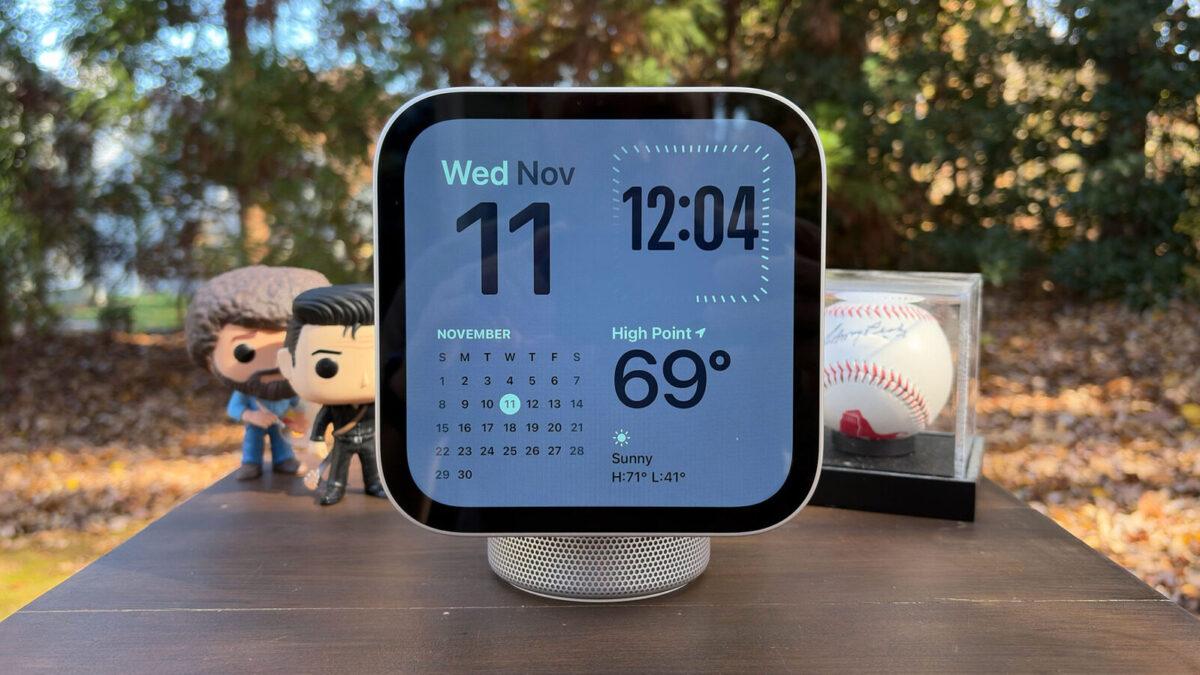
Apple's $299 HomeView smart display, which arrives this week, is a versatile Siri-powered home hub in this Apple HomeView review, but it relies on an iPhone or iPad to run most of its apps.
Apple is nearly a decade behind its main rivals in the smart display category. It did not rush. Now it is betting that iPhone owners will like a mix of elevated design and newly expanded Siri capabilities.
How it works
Unlike smart displays from Amazon and Google, the HomeView depends on a companion device. You need an iPhone or an iPad to mirror apps, using technology similar to CarPlay.
That ties its usefulness to how much you use Apple's core apps, such as Messages, Calendar, Photos and Reminders. You also need some smart home devices, and you must be willing to give Siri access to personal data inside some of those apps. Recipes mean using Safari.
Design and display
The tabletop HomeView has a cylindrical, domed base and a 7-inch Liquid Retina display. The wall-mounted option is only the screen, and the mount costs extra.
The LED-backlit multi-touch IPS panel has a 1,088 x 1,088 resolution at 200 pixels per inch. Apple added a fingerprint-resistant coating. An ambient light sensor adjusts brightness and warmth.
Brightness peaks at 500 nits in direct sunlight. At night it drops to 0.3 nits, the lowest ever on an Apple display. Apple says that makes it suited to a nightstand, though the device has a camera.
There are no physical buttons. You control it with swipes, taps or your voice. You can tilt the screen but not change its height, and a built-in accelerometer adjusts the audio to match the angle.
Sound and power
Every version has two full-range drivers in the display. The base of the tabletop model adds a down-firing woofer and a pair of force-canceling passive radiators, so it has fuller sound and more bass than the wall-mounted models.
Around back is a single USB-C port for power. The standard version ships with a USB-C to USB-C cable and a 30-watt power adapter.
Buyers of the USB-C wall mount must buy the adapter separately. Apple sells a 40W dynamic power adapter, which can reach 60W, for $39. The minimum required 20W supply costs $19.
 Take the quizWhat Kind of Holiday Spender Are You? Take the Black Friday QuizStart →
- 1Dow Futures Jump 1.5% as Wall Street Tries to Rebound From Rout

- 2Dow futures slip as AI stocks give back Nvidia’s rally
- 3Nasdaq Falls Into Correction as Buffett’s Crash Advice Resurfaces

- 4Fed, Broadcom and Micron Make Dec. 9 a Big Day for Stocks

- 5Alphabet GOOG falls 1.06% as chip report clouds Google’s 2027 TPU orders
 Lifestyle · Food & HealthCold vs Flu vs RSV: How to Tell the Difference by Symptoms, Speed and Duration
 LifestyleWhy Do Long Lines Make People Curious? 5 Reasons We Join the Crowd
 Technology · Apps & SoftwareHow to Secure a Home Wi-Fi Network: 7 Steps Cybersecurity Agencies Recommend
 Lifestyle · Food & HealthHigh Blood Pressure: Symptoms, Readings and 5 Ways to Lower It, Experts Say