Serian Haze Reached 23-Cigarette Daily Risk Comparison, MP Says
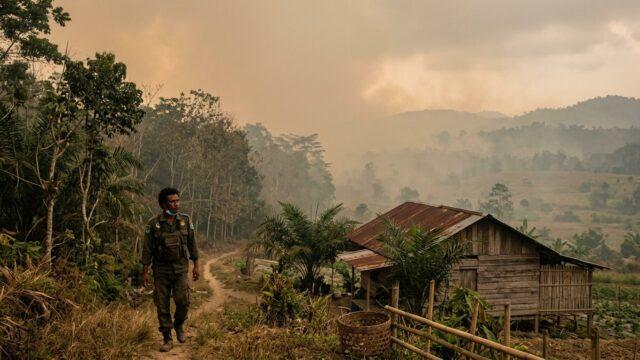
Smoke from fires in Indonesia spread to Malaysia during a September haze episode, pushing air pollution in Serian above the country’s emergency threshold. Malaysian MP Dr Kelvin Yii said the worst exposure carried a health-risk comparison of about 23 cigarettes a day and renewed calls for a transboundary haze law.
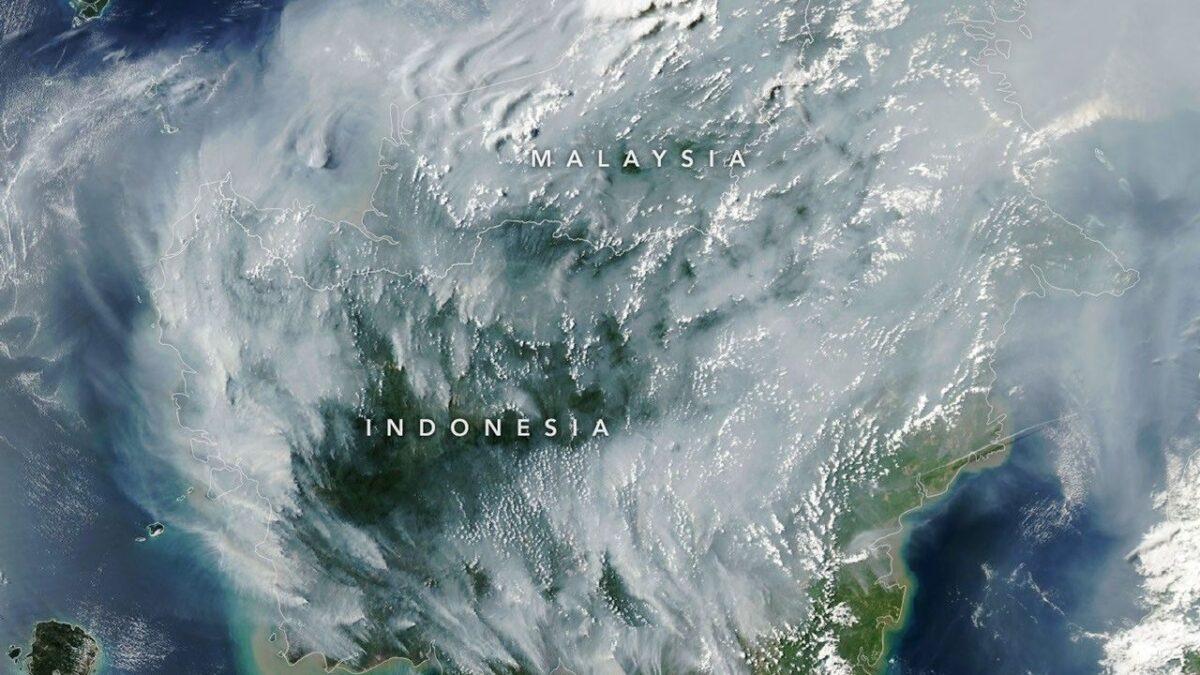
Malaysian lawmaker Dr Kelvin Yii told parliament that haze from fires in Indonesia exposed residents of Serian, Sarawak, to a health risk comparable to smoking about 23 cigarettes a day at the episode’s worst point, citing a September 2026 air pollution reading.
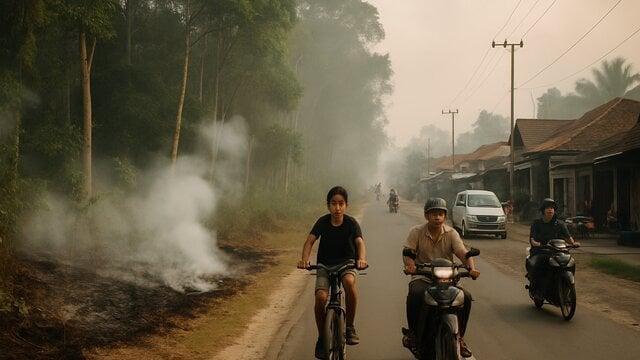
Serian’s Air Pollutant Index (API) climbed above Malaysia’s emergency threshold on September 4, as smoke from fires in Kalimantan crossed into Malaysia. The pollution prompted an emergency proclamation for the Serian Division and school closures across parts of Sarawak.
Malaysia’s National Disaster Management Agency reported an API of 495 in Serian at 7 a.m. local time, rising to 510 at 9 a.m. and 517 at 11 a.m. Radio Televisyen Malaysia reported a reading of 521 at 2 p.m.
The Sarawak State Education Department ordered 647 primary and secondary schools to close from September 7 to 11, shifting classes to home-based learning. The closures covered 563 primary schools and 84 secondary schools across 12 district education offices.
Yii made the cigarette comparison during an October 13 debate in parliament’s Special Chambers on haze. “On September 4, every resident of Serian, from newborn babies to the elderly, was breathing air equivalent to smoking approximately 23 cigarettes a day,” he said.
He also cited a Kuching API reading of 357 on September 1, comparing it to approximately 14 cigarettes a day. Yii called for a Malaysian Transboundary Haze Pollution Act and targeted trade measures against products linked to companies proven to be involved in burning.
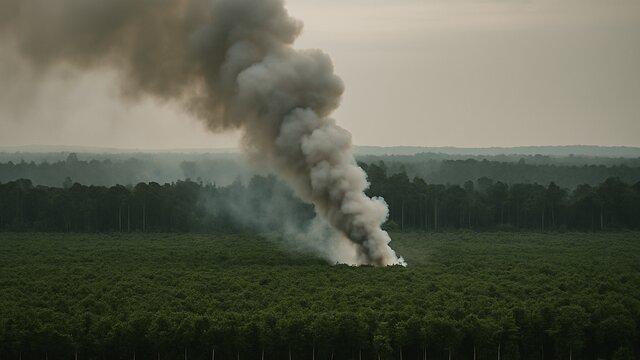
The smoke’s regional spread was documented by the ASEAN Specialised Meteorological Centre. Its September review found moderate to dense smoke from large parts of Kalimantan drifting into Malaysia, Singapore and the Philippines.
The center also reported that Sumatra and Kalimantan recorded their highest September hotspot counts in five years. Indonesia’s Ministry of Forestry reported hundreds of high-confidence hotspots across West and Central Kalimantan as fires intensified around the turn of August and September.
The cigarette comparison is a health-risk estimate, not a measure of cigarette smoke physically matching outdoor pollution. Berkeley Earth’s method treats one day of exposure to 22 micrograms per cubic meter of fine particulate matter, known as PM2.5, as roughly equivalent in health impact to smoking one cigarette a day.
Berkeley Earth derived the comparison from mortality statistics to make air pollution’s health effects easier to understand. Malaysia calculates the API using separate pollutant sub-indices and reports the highest one, while PM2.5 is a separate concentration measure.