Meteorite Landed Cape Cod: Radar Traces May 30 Fireball’s Orbit
Scientists in Europe and the US have combined radar, infrasound and camera footage to trace the daytime fireball that fell over Cape Cod Bay on May 30, 2026. The rock was a small asteroid nudged by Jupiter onto a comet-like orbit toward Earth.
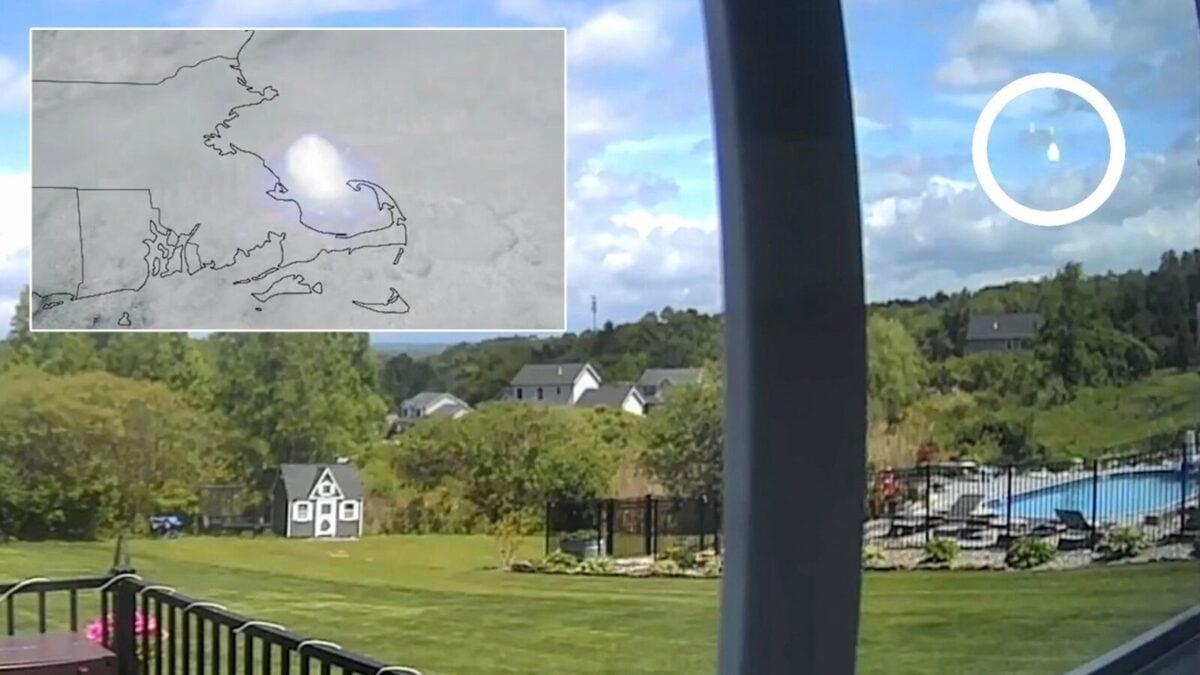
A meteorite landed in Cape Cod Bay, Massachusetts, on May 30, 2026, and astronomers have now traced the rock back to a small asteroid. Jupiter's gravity disturbed it and sent it on a comet-like orbit toward Earth, according to a team of European and US scientists.
The object was a daytime fireball, which astronomers call a bolide. At 1:06 p.m. local time (18:06 UTC), many people saw it fall over coastal Massachusetts. Some also reported a sonic boom that rumbled across the northeastern US coast.
How the team pieced it together
Space physicist Juha Vierinen of the Arctic University of Norway in Tromsø led the work. His team combined data from a meteor-observing radar network, ordinary weather radar, infrasound stations and camera footage. Infrasound picks up low-frequency pressure waves in the air.
The key instrument was the Spread Spectrum Interferometric Meteor Observing Network, known as SIMONe, based at the Massachusetts Institute of Technology's Haystack Observatory. MIT, the Arctic University of Norway and the Leibniz Institute of Atmospheric Physics in Kühlungsborn, Germany, developed it jointly.
"We were fortunate that the event occurred within the coverage of SIMONe," Vierinen said.
Ryan Volz, a radio scientist at Haystack Observatory and a member of the team, agreed. "We got pretty lucky to observe this one," he said. He explained that a bolide must enter the atmosphere within about 62 miles (100 kilometers) of a SIMONe-like radar for its head echoes to be detectable. Only a handful of places in the world meet that condition.
Head echoes and the breakup
A head echo is what radar sees when a meteoroid enters the atmosphere and superheats the air, creating a cloud of plasma around it. A meteoroid is the lump of rock while it is still in space. "The head echoes give the best constraints on the meteoroid's trajectory," Volz said.
The head echo usually lasts only briefly, from about 56 miles (90 kilometers) in altitude down to about 44 miles (71 kilometers). It then becomes a trail echo, produced by turbulent plasma left in the meteoroid's wake.
For the May 30 bolide, the trail echo was detected down to an unusually low 20 miles (32 kilometers). At that point the rock fragmented with an explosive force equal to 500 tons of TNT. Its total impact energy was about 1.1 kilotons of TNT.
Only three recorded bolides worldwide had greater impact energy in 2025, which shows how rare such events are.
Radar and infrasound follow the debris
Four Next Generation Weather Radars, known as NEXRAD, then took over. The National Weather Service, the Federal Aviation Administration and the U.S. Air Force jointly operate them. They recorded the debris cloud as solid chunks of rock fell into Cape Cod Bay as meteorites.
Infrasound readings backed up the radar detections. The Elginfield Infrasound Array in Ontario, Canada, picked up the atmospheric pressure waves from the fall and breakup, as did citizen scientists running their own equipment. Such waves can travel hundreds or thousands of kilometers.