Alaska Reports 4 New Mpox Cases in Anchorage, Most Since 2022
Alaska health officials have confirmed four new mpox cases in Anchorage, none linked to out-of-state travel. It is the state's highest annual count since 2022. Officials are tracing the source and urging vaccination for people at risk.
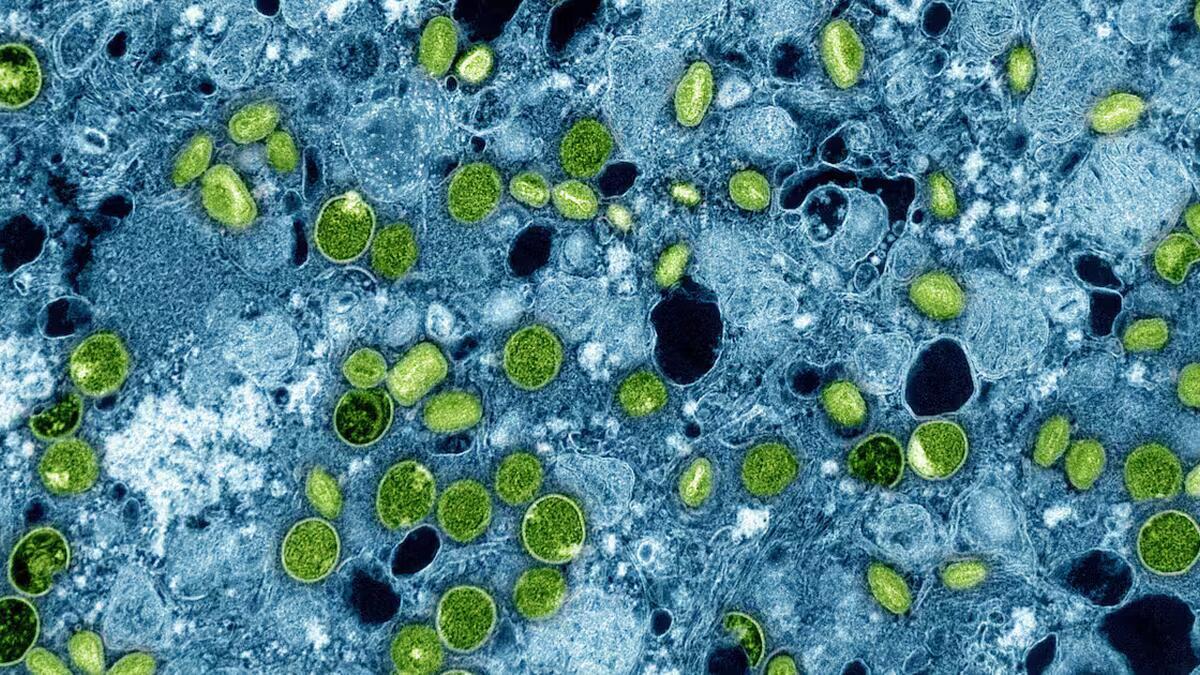
Alaska health officials have reported four new cases of mpox in Anchorage, an outbreak that appears to be expanding and is the state's highest annual total since 2022. The disease, formerly called monkeypox, spreads through close contact and can be fatal.
None of the four patients reported traveling outside Alaska in the month before they became infected. That breaks from earlier Alaska cases, all of which involved recent travel.
Three of the cases emerged in October and were announced in late October through a state Department of Health alert aimed at the public and healthcare providers. The fourth was reported to the state more recently, said Dr. Joe McLaughlin, Alaska's state epidemiologist.
Alaska recorded five cases in 2022, during a global outbreak. Between 2023 and 2025 it had only two.
Tracing the source
McLaughlin said all four Anchorage patients are men. Two are partners, but it is unknown whether other links exist among them. The patients are isolating and recovering.
McLaughlin and Dr. Randi Rollins, an epidemiologist with the US Centers for Disease Control and Prevention (CDC) who is working with the Alaska Department of Health, said officials are trying to find the source of infection.
Rollins cautioned against concluding the virus is spreading locally. The lack of reported travel "does not necessarily establish that the monkeypox virus is circulating here in Alaska," she said. "They may have had exposure to somebody who traveled to Alaska, and they may be the end of that transmission line at this point. We don't know."
Symptoms and infectious period
Symptoms usually appear three to 17 days after infection, Rollins said. The first phase resembles the flu, with fever, chills, fatigue, headache, sore muscles and swollen lymph nodes. Lesions follow in the second phase, as bumps that are firm or sometimes tender.
Some people skip the early symptoms and show signs only when the rash develops. The illness lasts a few weeks, and patients are considered recovered once all lesions are gone.
Until the last lesion heals, "the person is still infectious and can transmit monkeypox, and that can typically take two to four weeks," Rollins said.
A national pattern
The Anchorage cluster fits a national trend. After a lull following the 2022-23 global outbreak, US cases are rising again, with an uptick beginning in March, the CDC reported.
The virus now circulating is clade I, genetically different from the clade II variety behind the 2022 outbreak. In Central Africa, clade I had been more deadly than clade II, but the current version appears not to be particularly deadly, according to health officials.
Alaska officials are encouraging anyone at risk of infection to get vaccinated. The JYNNEOS vaccine, approved by the Food and Drug Administration in 2019, protects against both clades of mpox and against smallpox. It is given in two doses and is available through the Anchorage Health Department and other health providers.