New Zealand Election Leaves Luxon One Seat Short of Majority
New Zealand Prime Minister Christopher Luxon needs the centrist Opportunity party’s support to form a government after final election results left his coalition one seat short of a majority. Luxon plans formal talks with three parties, while a recount could offer another route to power.
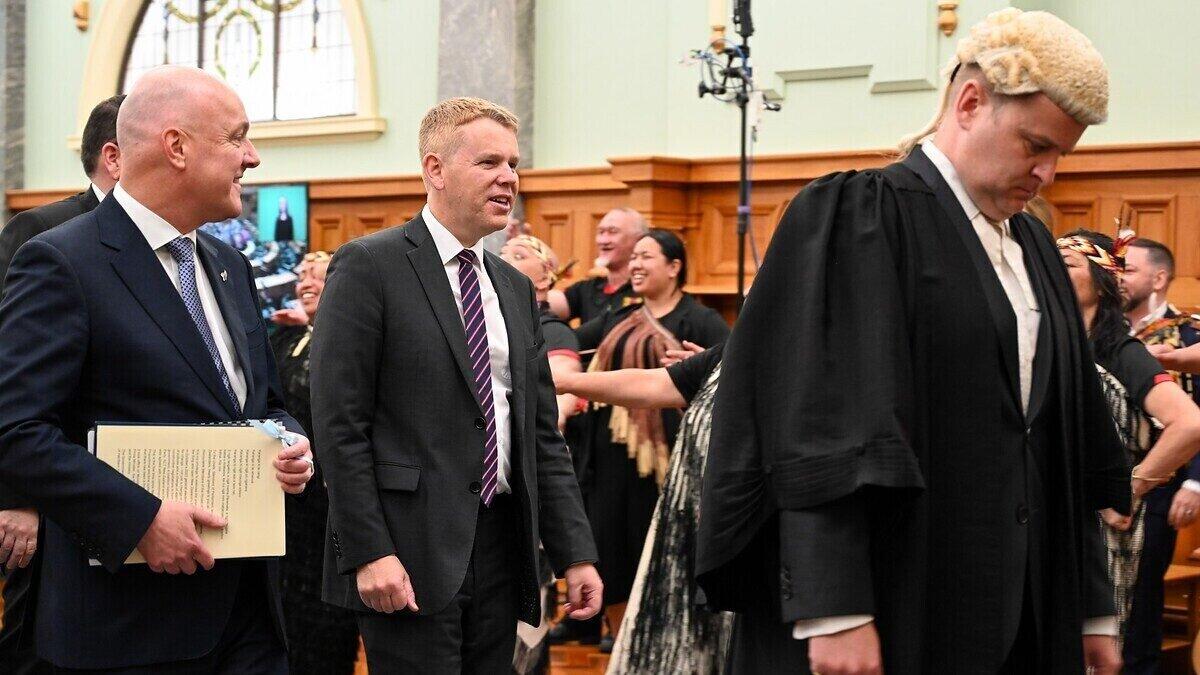
New Zealand Prime Minister Christopher Luxon’s coalition fell one seat short of a parliamentary majority in the 2026 election, the electoral commission’s final results showed. His National party won the most seats, but it needs support from the centrist Opportunity party or a successful recount to govern.
The result leaves New Zealand facing complex coalition talks and the possibility of another election. National’s bloc holds 65 seats in the 130-seat parliament, where 66 are needed for a majority.
Special votes change three seats
National fell to 40 seats after officials counted nearly 485,000 special votes, cast overseas or outside a voter’s electorate. Preliminary results on November 7 had given National and its two coalition partners a two-seat majority.
Labour finished with 36 seats, the Greens with 17 and Act with 13. New Zealand First won 12 seats, Opportunity seven and Te Pati Māori five.
Three electorate seats changed hands after the special votes. Labour took Wairarapa from National by 81 votes and Hamilton East from National by 173 votes.
The Greens won Wellington Bays from Labour by 1,610 votes.
National could regain a majority with its existing partners if it applies for a recount and wins back one of those seats. Recount applications must be made by December 3, and results could take another five days.
Opportunity sets terms for talks
Luxon said National will begin formal negotiations with New Zealand First, Act and Opportunity. He described the discussions as “challenging” and said they could take some time.
Luxon had previously ruled out working with Opportunity, but softened his position after the election. He said he intended to find common ground with the party.
“Getting it right matters far more than getting it done quickly,” Luxon said.
Opportunity leader Qiulae Wong confirmed she would speak with Luxon. She said the party’s non-negotiable priorities include climate and environmental policies and caps on political donations.
Wong said she would not make a deal if New Zealand First leader Winston Peters serves as foreign affairs minister. Peters has held the position on three occasions.
Opportunity’s other priorities include action on New Zealand’s supermarket duopoly, a 10-year cross-party health plan and an end to bottom trawling in the fishing industry.
Labour leader Chris Hipkins said he was proud his party won the highest share of the party vote, though he was disappointed it could not deliver a change of government. He said a decision on his leadership would follow the formation of a government.
“Kiwis won’t thank us for rushing to an agreement that falls apart, or for sending them back to the polls,” Luxon said.
 Take the quizWhat Kind of Holiday Spender Are You? Take the Black Friday QuizStart →
- 1Qualcomm stock climbs to $168.66 as chipmaker sets $500 target for CEO

- 2Sandisk shares jump nearly 16% to $85.36 after Kioxia-Nvidia test

- 3Tesla shares jump 4.86% to $398.60 after German robotics filing

- 4Apple shares edge up to $355.58 as AI selloff spares iPhone maker

- 5Nasdaq Composite rises nearly 2% as tech rebound eases AI fears

 LifestylePeople Who Cover Their Laptop and Water Bottle in Stickers Often Share These 6 Traits
 LifestyleWhat Constantly Shaking Your Leg While Sitting Says About You, Psychologists Explain
 Lifestyle · Food & HealthNormal Blood Sugar Levels: A1C, Fasting and After-Meal Ranges Explained
 Lifestyle · Food & HealthNorovirus Symptoms: How Long It Lasts and When You Stop Being Contagious