Voyager 1 gives controllers a scare before signal returns
NASA's Voyager 1 stopped communicating with Earth after the Deep Space Network failed to detect a signal on October 18 and October 19. The signal returned on October 20. Engineers are investigating a possible thruster issue as the spacecraft approaches a milestone that will stretch command-and-response times to 24 hours each way.
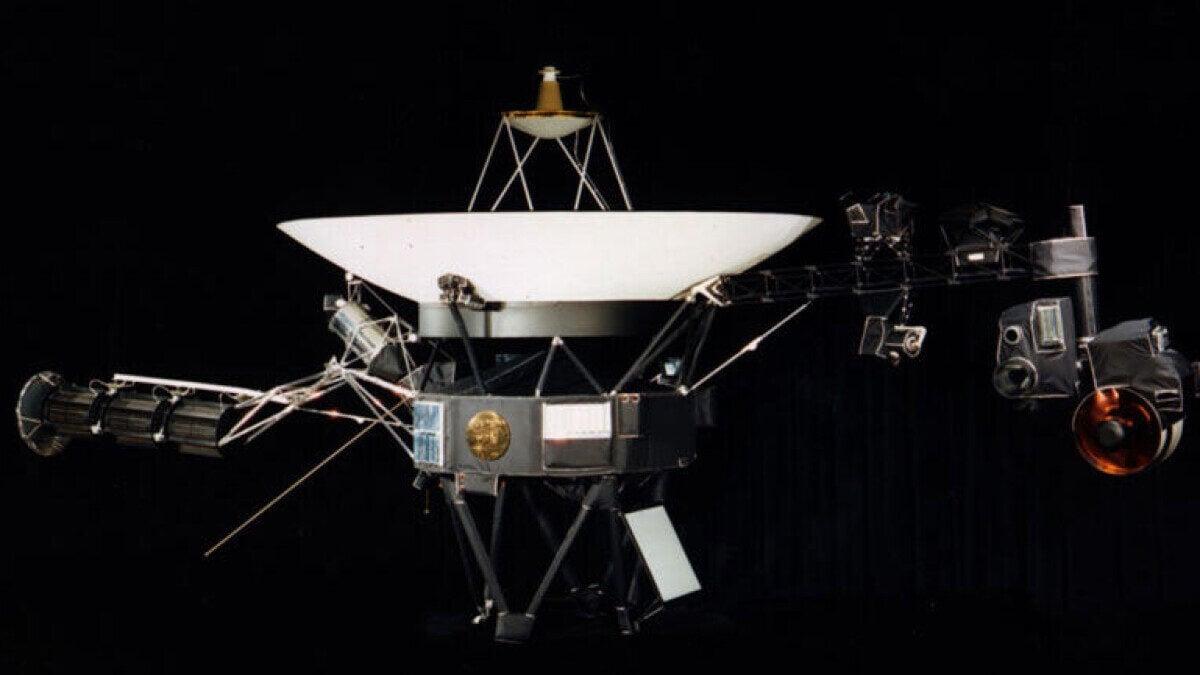
NASA’s Voyager 1 gave controllers a communications scare after the Deep Space Network could not detect its signal on October 18, and the spacecraft reconnected on October 20. Engineers are investigating a possible thruster problem as the probe approaches a point where a command will take 24 hours to reach it and another 24 hours for a response to get back to Earth.
The signal was still missing during the next scheduled attempt on October 19. Its return the following day ended the brief silence, but left the mission team trying to establish what had gone wrong.
“This is the first time we've seen the spacecraft do something like this, but we are also at a point in the mission where we have to expect the unexpected,” Kareem Badaruddin, Voyager mission manager at NASA’s Jet Propulsion Laboratory, said.
“We're relieved to be back in contact with Voyager 1 and are eager to understand what happened.”
What may have caused Voyager 1 to go silent?
A group of thrusters appears to have gone offline, while backup thrusters switched on, according to the account of the incident. That sequence could mean the spacecraft’s onboard computers detected a problem and put it into safe mode.
Engineers are still working to understand the cause. The returned signal confirmed contact had been restored, but did not resolve why the spacecraft temporarily stopped communicating.
The stakes are unusually high. Voyager 1 and its twin are veteran spacecraft operating with limited power, and a previous low-power condition caused Voyager 1 to switch off one of its two radio transmitters. Voyager 2 experienced an antenna-pointing issue in 2023.
Why does the communications pause matter?
As Voyager 1 travels farther from Earth, even routine troubleshooting takes longer. In a few weeks, a command will need 24 hours to reach the spacecraft, with a further 24 hours required for its response to arrive. A communications interruption therefore leaves engineers waiting longer to learn whether a command worked or a signal has returned.
The incident came after controllers carried out a procedure called the “Big Bang” on both probes. They switched off onboard devices and moved to lower-power alternatives, a change intended to extend the spacecraft’s working lives by a few more years and delay further instrument shutdowns.
Controllers completed the procedure on Voyager 2 first, then on Voyager 1 six weeks later, in September. The power-saving work is important because the spacecraft cannot keep every system running indefinitely. Each shutdown helps preserve operations elsewhere, but the recent lapse shows how closely engineers must watch the probes as their available power declines.
Badaruddin said the team had to prepare for unexpected behavior at this stage of the mission. The signal’s return was welcome; the unexplained pause still requires investigation.
How would NASA know the mission had ended?
Suzanne Dodd, project manager for the Voyager project, described the first response as checking whether a lost signal came from the spacecraft or from equipment on Earth.
“We're just going to one day not hear the signal from the DSN, and we're going to rush around and make sure that it's not something on the ground,” Dodd said.
Engineers would then listen for months before declaring the mission over. The brief interruption did not reach that point: Voyager 1’s signal returned on October 20, and the next challenge is to determine why the spacecraft went quiet.